GameCuki is reader-supported. When you buy through links on our site, we may earn an affiliate commission at no extra cost to you. As an Amazon Associate I earn from qualifying purchases. Learn more.
The RTX 5080 vs RTX 4090 question looks simple, since the newer card has the lower model number but the older one was the flagship. The 4090 is still the faster raw GPU, while the 5080 brings DLSS 4, lower power draw and far easier availability. Here is where each card wins and which one makes sense for a 4K gaming PC.
Best for New Builds and 4K With DLSS 4
RTX 5080
Bottom LineThe practical pick for most 4K builds: DLSS 4 Multi-Frame Generation, lower power draw and a card you can actually buy new.
Without frame generation, the 4090 leads. Across a set of eight 4K games, the 4090 averaged about 20% higher frame rates than the 5080, and its 1% lows were roughly 22% better. The gap changed by game: it was around 13% in Space Marine 2, about 22% in God of War Ragnarök and Star Wars Jedi: Survivor, and near 28% in Cyberpunk 2077 with ray tracing and DLSS Quality.
Synthetic runs point the same way. In 3DMark Port Royal the 4090 scored about 12% higher, and in Time Spy Extreme about 16% higher. The reason is plain in the hardware: the 4090 has 16,384 CUDA cores against 10,752 on the 5080, and a 384-bit memory bus against 256-bit.
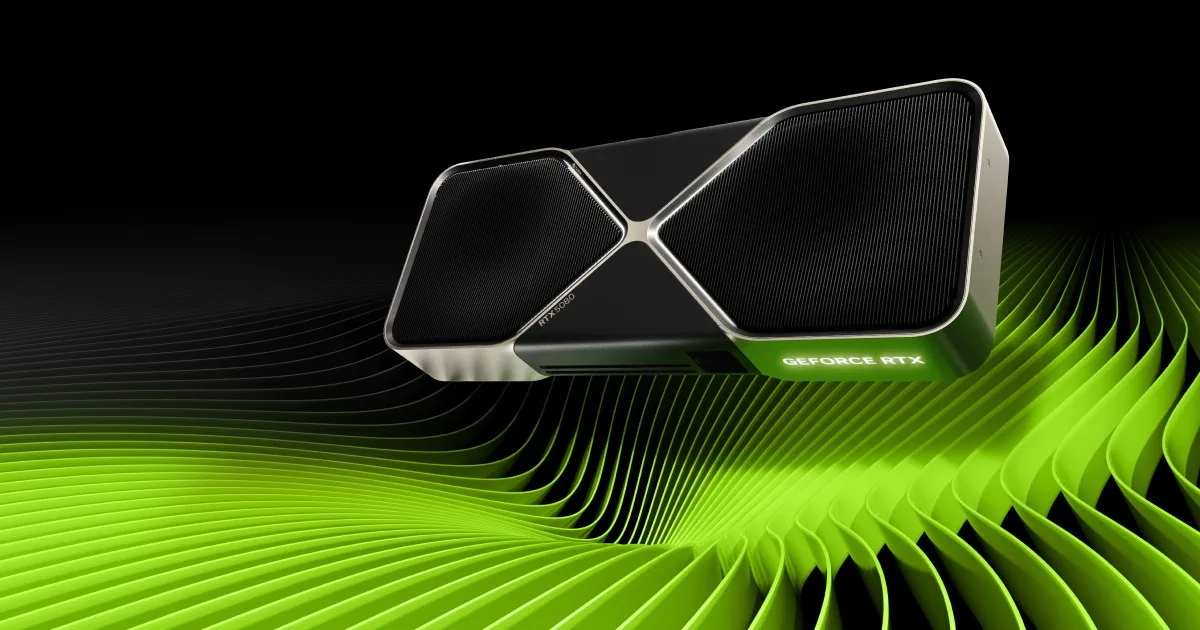
The GeForce RTX 5080 Founders Edition is a two-slot card. (Image: NVIDIA)
Quick pick: go with the 4090 if you play at 4K with high settings and rarely use frame generation.
DLSS 4: Where the RTX 5080 Closes the Gap
DLSS 4 is the 5080’s best argument. Multi-Frame Generation, which inserts up to three generated frames for every rendered one, is an RTX 50 series feature, so the 4090 is limited to the single-frame generation of DLSS 3. In a Cyberpunk 2077 4K ray tracing run, a 5080 with 4X Multi-Frame Generation reached about 183 FPS, roughly 31% above a 4090 using DLSS 3.
That is a real advantage in games that support it, but it is not the same as raw speed. Generated frames raise the frame counter without cutting input latency the way rendered frames do, so the extra smoothness works best on top of a healthy base frame rate. Our what is DLSS guide explains how each version works.
VRAM and Memory: 24GB vs 16GB
The 4090 carries 24GB of GDDR6X on a 384-bit bus, giving about 1.01 TB/s of bandwidth. The 5080 has 16GB of faster GDDR7 on a 256-bit bus, which lands at about 960 GB/s. Faster memory narrows the bandwidth gap, but it cannot add capacity.
For 4K gaming, 16GB is enough for current games at high settings, though it leaves less headroom for heavily modded titles, 8K textures or running a large game alongside other GPU work. If you edit video, render 3D scenes or run local AI models, the extra 8GB on the 4090 is the spec that matters most.
Productivity: Closer Than the Gaming Gap Suggests
Content creation results are mixed. In Blender’s Barbershop scene, the 4090 finished in about 34 seconds against 41 for the 5080. In Puget Systems’ DaVinci Resolve and Premiere Pro benchmarks, the 5080 scored roughly 5% to 7% higher.
Quick pick: pick the 5080 for Resolve or Premiere work, and the 4090 for heavy 3D rendering and anything that fills 16GB of VRAM.
Power, Size and Features
The 5080 is rated at 360W against 450W for the 4090. In gaming runs the 5080 drew roughly 326W to the 4090’s 346W, and with ray tracing about 333W against 381W, so the real-world gap is smaller than the rating suggests but still favors the newer card. Peak draw was also lower on the 5080, about 376W against 468W.
The Founders Edition 5080 is a two-slot card and the 4090 a three-slot design, which matters in smaller cases, though partner models of both vary. The 5080 also supports DisplayPort 2.1b, while the 4090 is limited to DisplayPort 1.4a, a difference that shows up on high-refresh 4K monitors. Both cards use a 16-pin power connector.
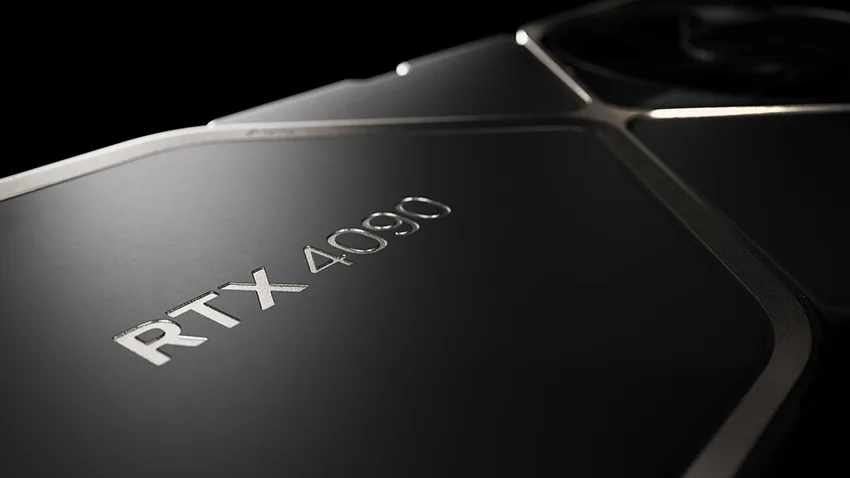
The RTX 4090 Founders Edition uses a larger three-slot cooler. (Image: NVIDIA)
Price and Availability: The Deciding Factor
The 4090 launched at a higher price than the 5080, and it has since gone out of production. New stock is scarce, and cards that do turn up have often been listed well above launch price. The 5080, launched at a lower MSRP, is the card you can find new with a warranty. Used 4090s are an option, but check the seller and the warranty before paying a premium.
If a new 4090 costs far more than a 5080, the roughly 20% performance edge rarely justifies it. If you already own a 4090, there is little reason to swap. If you are choosing for a 4K build, our best GPU for 4K gaming roundup shows where both cards sit among current options, and the RTX 5070 vs RTX 5070 Ti comparison is useful if your budget is lower.
RTX 5080 vs RTX 4090: Full Specs
Feature
RTX 5080
RTX 4090
Architecture
Blackwell
Ada Lovelace
Release
January 2025
October 2022
CUDA cores
10,752
16,384 Wins
VRAM
16GB GDDR7
24GB GDDR6X Wins
Memory bus
256-bit
384-bit Wins
Memory bandwidth
960 GB/s
1.01 TB/s Wins
Boost clock
2.62 GHz Wins
2.52 GHz
TDP
360W Wins
450W
Slot size (Founders Edition)
2-slot Wins
3-slot
DisplayPort
2.1b Wins
1.4a
Frame generation
DLSS 4 Multi-Frame Generation Wins
DLSS 3 Frame Generation
4K gaming speed
About 20% behind the 4090 on average
Faster Wins
Availability
New stock available Wins
Out of production
And the Winner Is…
WinnerRTX 5080
The 4090 is the faster card, and it is the better pick if you need 24GB of VRAM or want the highest 4K frame rates without leaning on frame generation. But for most people, the RTX 5080 is the card to buy. It trails by roughly 20% in raw gaming speed, yet it offers DLSS 4 Multi-Frame Generation, lower power draw, DisplayPort 2.1b and a full warranty on new stock, usually at a much lower real-world cost. That settles the RTX 5080 vs RTX 4090 decision for most 4K builds. Choose the 4090 only if you find one at a fair price, or if your work depends on its extra memory.
I'm Sean, and I write the comparisons on GameCuki. I cover anything gamers weigh up before buying: consoles and handhelds, PC components and gaming laptops, monitors, controllers, headsets and accessories, plus subscriptions and services like Game Pass and PlayStation Plus. I put both options on the same checklist, using official specs, professional reviews and owner feedback, and I only mention what owners say when at least two of them report the same thing. Every comparison ends with one clear verdict and the type of player each option suits. I don't accept free products or payment from brands, and what I write comes from research, not my own use of the products. You can read my full process on our How We Review page.
Areas of Focus
Controller Match-UpsHeadset Match-UpsConsole vs. ConsoleSpecs & Latency