GameCuki is reader-supported. When you buy through links on our site, we may earn an affiliate commission at no extra cost to you. As an Amazon Associate I earn from qualifying purchases. Learn more.
GameCuki VerdictBuy With Caveats
What Our Verdicts Mean
GameCuki Top PickThe best option in its class, with no serious, repeated problems.
RecommendedA good buy for most people. Weaknesses are minor or only matter to some players.
Buy With CaveatsRight for a specific kind of player only, because of a significant drawback.
Skip ItNot recommended. A better option exists at a similar price.
The Bottom LineA compact, fanless direct drive base with clean force feedback and real Xbox support, but it no longer leads its class on value and it ties you to Fanatec's closed ecosystem.
S and Xbox One when paired with an Xbox-licensed wheel
Fanless aluminum body with passive cooling
QR2 quick release gives a solid, zero-play wheel connection
Side and bottom T-nut mounting suits aluminum profile rigs
Standard and Advanced tuning menus suit beginners and tinkerers
Boost Kit 180 adds a clear path from 5 Nm to 8 Nm
Large catalog of Fanatec wheels, pedals and shifters
Cons
Newer 12 Nm bases from rivals now sell at similar money
Proprietary connectors limit third-party wheels and pedals
Base only, so you still pay for a wheel and pedals
Fanatec CSL DD (5 Nm, QR2) Specs
Platforms
PC, plus Xbox One and Xbox Series X
S with an Xbox-licensed wheel
Drive
direct drive, FluxBarrier motor
Peak torque
5 Nm (8 Nm with Boost Kit 180)
Rotation
2520 degrees, adjustable
Position sensor
contactless Hall sensor
Motor shaft
carbon fiber composite
Cooling
fanless, aluminum housing as passive heat sink
Quick release
QR2 Lite base-side (Type-C), preinstalled
Mounting
T-nut rail on sides and bottom, optional table clamp (5 to 60 mm)
Power supply
90 W (180 W with Boost Kit 180)
Ports
power, USB-C, DataPort-C, shifter 1 and 2, pedals, handbrake
In the box
base, power supply, four T-nuts, USB cable, quick guide
Not included
wheel, pedals, table clamp
This Fanatec CSL DD review is for anyone weighing the brand’s entry direct drive base against newer rivals. The CSL DD gives you 5 Nm of torque out of the box, a fanless aluminum body and a quick release borrowed from motorsport, and it is one of the few direct drive bases that works on Xbox. It is still a good piece of hardware, but the market has moved, and cheaper or stronger PC-only options now make the case harder to argue for new buyers.
If you are cross-shopping, our Moza R5 vs Fanatec CSL DD comparison covers the closest rival, and our Moza R5 bundle review looks at the all-in-one kit that competes for the same budget.
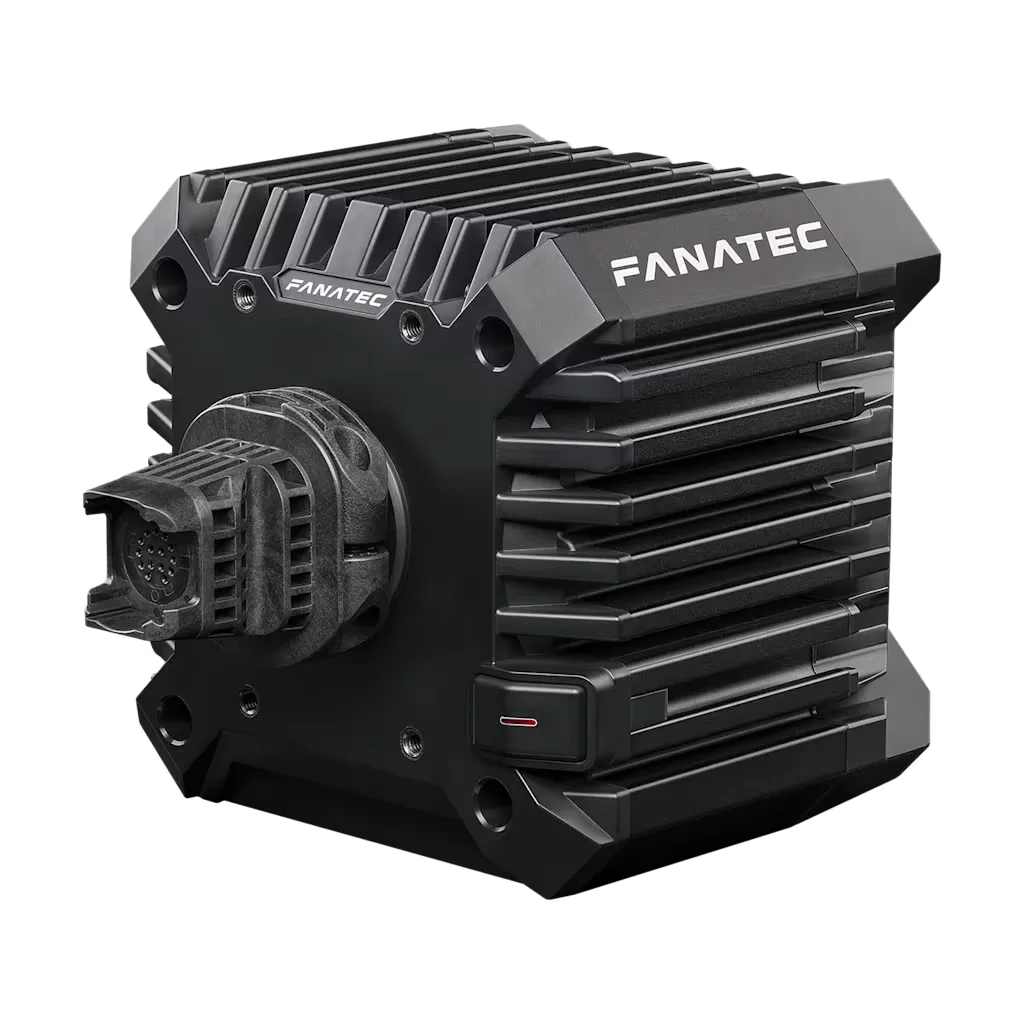
The CSL DD base with its QR2 quick release and finned aluminum body (Image: Fanatec)
Design and Build: Compact, Fanless and Finned
The CSL DD is small for a direct drive base. The extruded and CNC-machined aluminum casing works as both the structure and the heat sink, so there is no cooling fan to hum while you race. The end caps are composite, and the plastic parts can feel like a step down from the metal on pricier bases. The motor shaft is carbon fiber composite, which lowers rotating mass and helps the base react quickly.
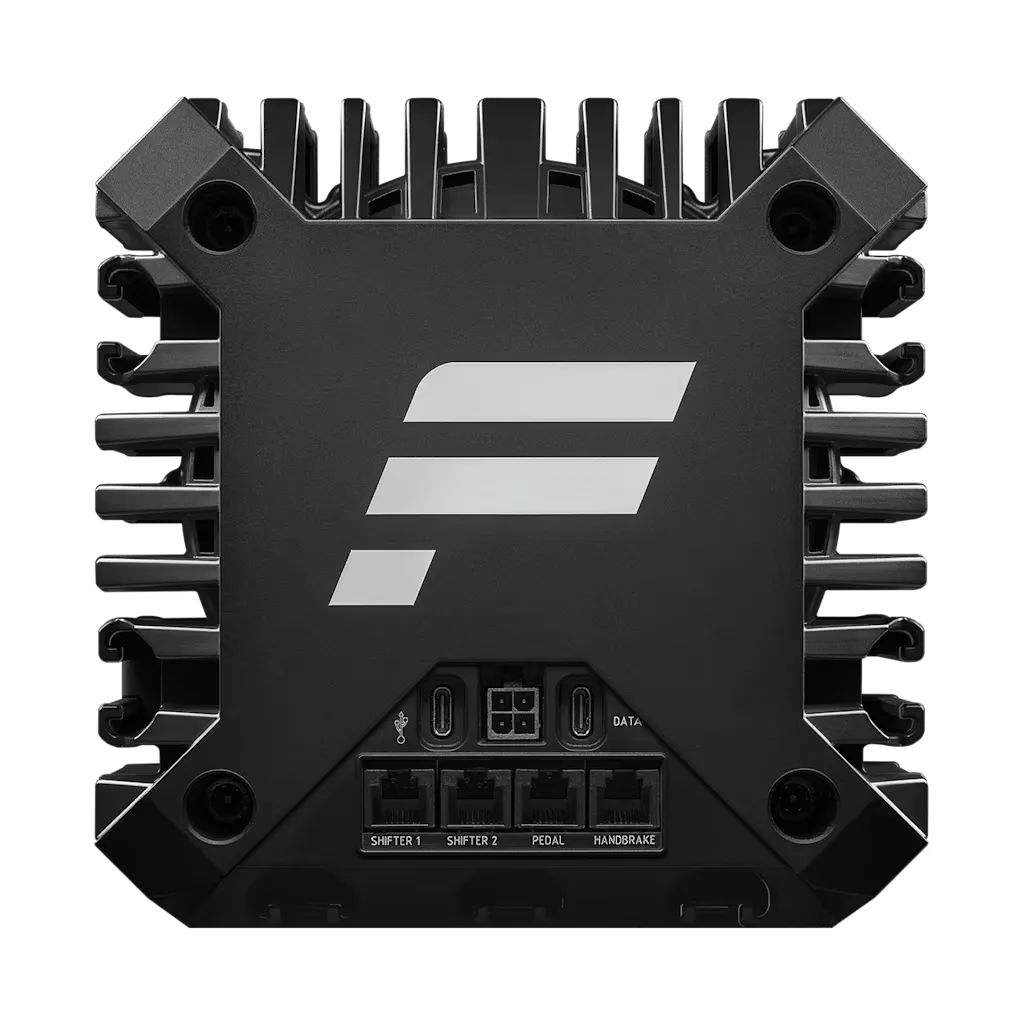
Connections sit on the back: power, USB-C, Fanatec’s DataPort-C, two shifter ports, a pedal port and a handbrake port. A contactless Hall sensor handles position, the same type of sensor Fanatec uses on its Podium series. Steering rotation is electronically limited to 2520 degrees and can be adjusted.
The rear panel carries power, USB-C, DataPort-C and the accessory ports (Image: Fanatec)
Force Feedback: Clean and Consistent, a Little Processed
Direct drive means the wheel sits on the motor shaft with no belt or gears in between, so small effects reach your hands without being diluted. The CSL DD delivers feedback that is crisp and consistent, and it can feel slightly more detailed in both light and large effects than some similar bases. Against the newest bases it can read as a touch processed, with less clean torque delivery and less advanced filtering.
At 5 Nm, the stock strength is plenty for most drivers new to direct drive, and the default settings are gentle for beginners. Heavier wheel rims can make the 5 Nm version feel underpowered, which is where the upgrade kit comes in.
QR2 Quick Release: Solid and Hot-Swappable
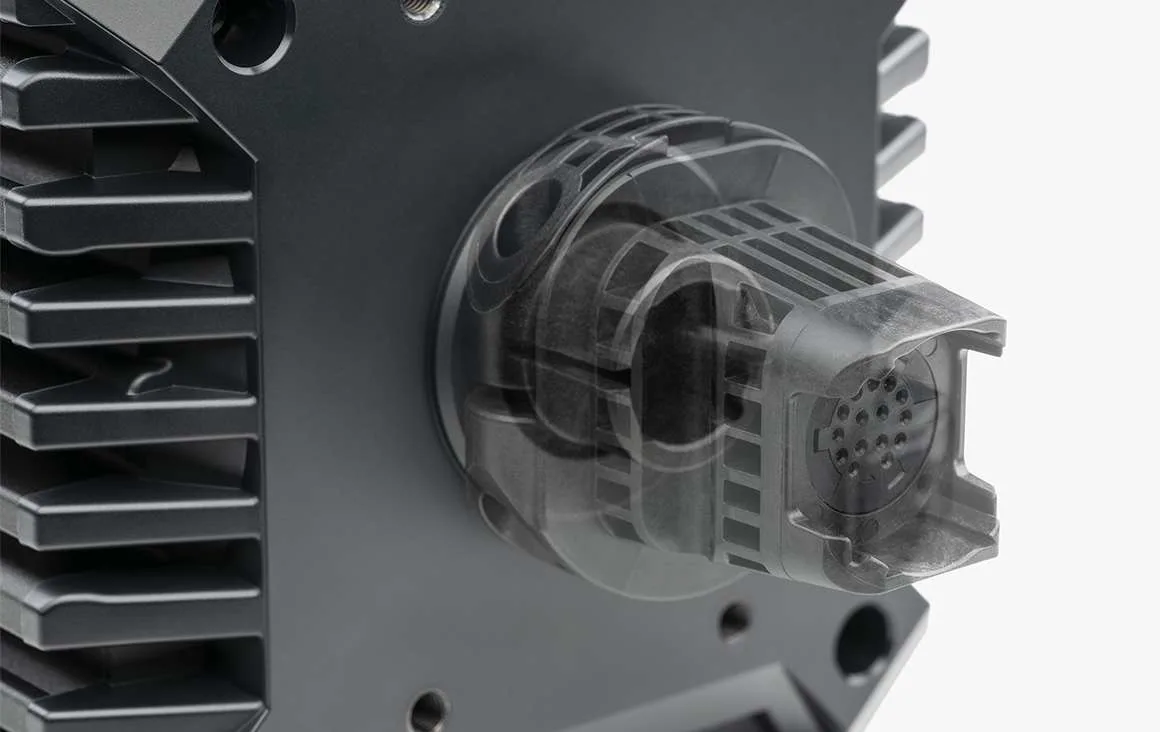
Every CSL DD sold today ships with the QR2 Lite base-side already fitted. The coupling shape comes from the quick release used on the 2022 BMW M4 GT3 race car, and it is a tapered design that holds a wheel with no noticeable play. You push the wheel toward the base to attach it, and the carbon fiber reinforced polyamide construction lets you swap wheels without restarting the sim or the base.
The QR2 coupling is tapered so the wheel seats tightly (Image: Fanatec)
The included base-side works with every QR2 wheel-side (Lite, regular and Pro) and does not limit torque, even with the Boost Kit 180. Any Fanatec wheel with a QR2 wheel-side fits, and owners of older QR1 wheels need an adapter route, since the QR1 connection can still show some play.
Platforms: Xbox Yes, PlayStation No
This is the base’s clearest strength and its clearest limit. On PC it works with Fanatec wheels directly. On Xbox One and Xbox Series X|S it works when you pair it with a wheel carrying Xbox licensing. It does not work with any PlayStation console and cannot be upgraded to do so, so PlayStation drivers need Fanatec’s separate Gran Turismo DD Pro. If you race on Xbox, our guide to the best Xbox steering wheels lists other options.
Software and Tuning: Simple, but Split Across Apps
The Standard Tuning Menu keeps setup simple for beginners, and the Advanced Tuning Menu opens up fine adjustment of force feedback characteristics. The software can feel limiting next to the tools from other premium brands, and the need to juggle two software packages can feel cumbersome. Settings may revert after a restart on some units, and early firmware updates briefly stopped some bases from responding. Fanatec added its FullForce feature through a June 2026 firmware update, so update the base through the Fanatec app before judging its feel.
Mounting: Rail System for Rigs, Clamp for Desks
T-nuts on the sides and bottom make the CSL DD easy to hard-mount to an aluminum profile rig, and four T-nuts are in the box. A table clamp is sold separately and supports table thickness from 5 to 60 mm, so a desk setup works but costs more. The front threaded inserts hold Fanatec accessories only and are not meant for front-mounting the base. Fanatec lists all its cockpits as compatible.
Boost Kit 180: Is the Jump to 8 Nm Worth It?
The Boost Kit 180 swaps in a 180 W power supply to unlock the full 8 Nm peak. The extra torque adds detail, but 5 Nm is already enough for many setups. The practical rule is simple: if you plan to run a heavy rim or want stronger effects in games like iRacing, the kit is worth considering. If you are new to direct drive, start at 5 Nm and see whether you miss anything. Only the standard 90 W supply or the Boost Kit 180 may be used with this base.
Ecosystem and Value: Where the CSL DD Falls Behind
Fanatec has one of the broadest catalogs in sim racing, with wheels, pedals, shifters and handbrakes that plug straight in. The cost of that is a closed system. Proprietary connectors and protocols limit what third-party wheels and accessories you can use, and accessories such as metal quick releases and upgraded rims add up. Because the CSL DD is a base alone, a full setup runs well beyond the base price, and newer 12 Nm bases from other brands are now priced close to it. That value gap is why we land on caveats rather than a clean recommendation.
Fanatec CSL DD FAQ
Is the CSL DD still worth buying?
It remains capable and well supported, but its value has slipped against newer bases that offer more torque at similar or lower prices.
Which version should I consider?
The 5 Nm version gives a clear taste of direct drive. With heavier wheels, the 8 Nm setup through the Boost Kit 180 is the better choice.
Is it a good choice for Xbox users?
Yes, provided you pair it with an Xbox-licensed Fanatec wheel. It is one of the more accessible direct drive routes on Xbox.
Is it a good choice for PC-only buyers?
Existing Fanatec owners will find it dependable. New PC buyers with no Fanatec gear have more flexible options elsewhere.
Is the ecosystem expensive over time?
It can be. Proprietary connectors and limited third-party compatibility can raise long-term costs.
Is the Fanatec CSL DD Worth It?
Fanatec CSL DD (5 Nm, QR2)
GameCuki VerdictBuy With Caveats
What Our Verdicts Mean
GameCuki Top PickThe best option in its class, with no serious, repeated problems.
RecommendedA good buy for most people. Weaknesses are minor or only matter to some players.
Buy With CaveatsRight for a specific kind of player only, because of a significant drawback.
Skip ItNot recommended. A better option exists at a similar price.
Whether the Fanatec CSL DD is worth it depends on where you race. It is a sound buy for Xbox drivers and for people already invested in Fanatec wheels and pedals, because the build, the QR2 connection and the clean force feedback hold up. It is a harder sell for new PC-only buyers, who can find more torque or a more open ecosystem for similar money. Pick it for Xbox support or a long Fanatec upgrade path. Skip it if you race on PlayStation or want the cheapest complete direct drive start.
I'm Fraser, and I write the reviews on GameCuki. That covers consoles and handhelds, PC gaming hardware, controllers, headsets and accessories, from big purchases like gaming laptops to small add-ons like screen protectors and grips. I build each review from the manufacturer's specs, professional reviews and verified owner feedback, and I check long-term issues like comfort, battery life and durability against several sources before they make it into the pros and cons. Every review ends with who the product is for and who should skip it. I don't accept free products or paid placements, and what I write comes from research, not my own use of the products. You can read my full process on our How We Review page.