GameCuki is reader-supported. When you buy through links on our site, we may earn an affiliate commission at no extra cost to you. As an Amazon Associate I earn from qualifying purchases. Learn more.
Choosing between the Moza R5 vs Fanatec CSL DD usually means choosing between a ready-to-race kit and a base you build around. Both are entry-level direct drive wheelbases in the 5 Nm class, but they are sold very differently and they open different doors. The real question is whether you want everything in one box or a platform you can grow.
Best Overall
Moza R5 Bundle
Bottom LineThe easier buy for a PC-only sim racer who wants a wheel, pedals and clamp in one box and is unlikely to need a console.
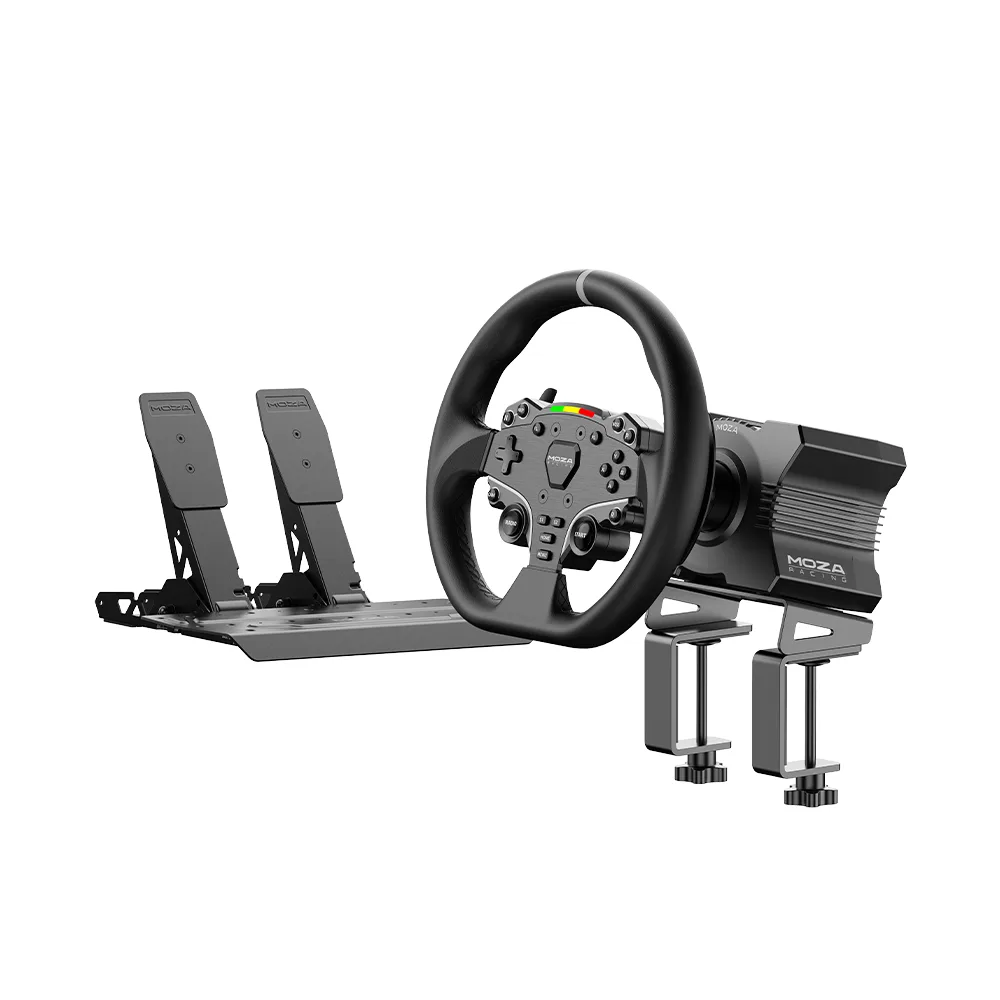
The two listings are not the same kind of product, and that shapes the whole comparison. The Moza R5 bundle includes the direct drive base, a 280 mm (11 inch) ES formula-style wheel with an aluminum quick release, SR-P Lite pedals (throttle and brake, no clutch) and a desk clamp.
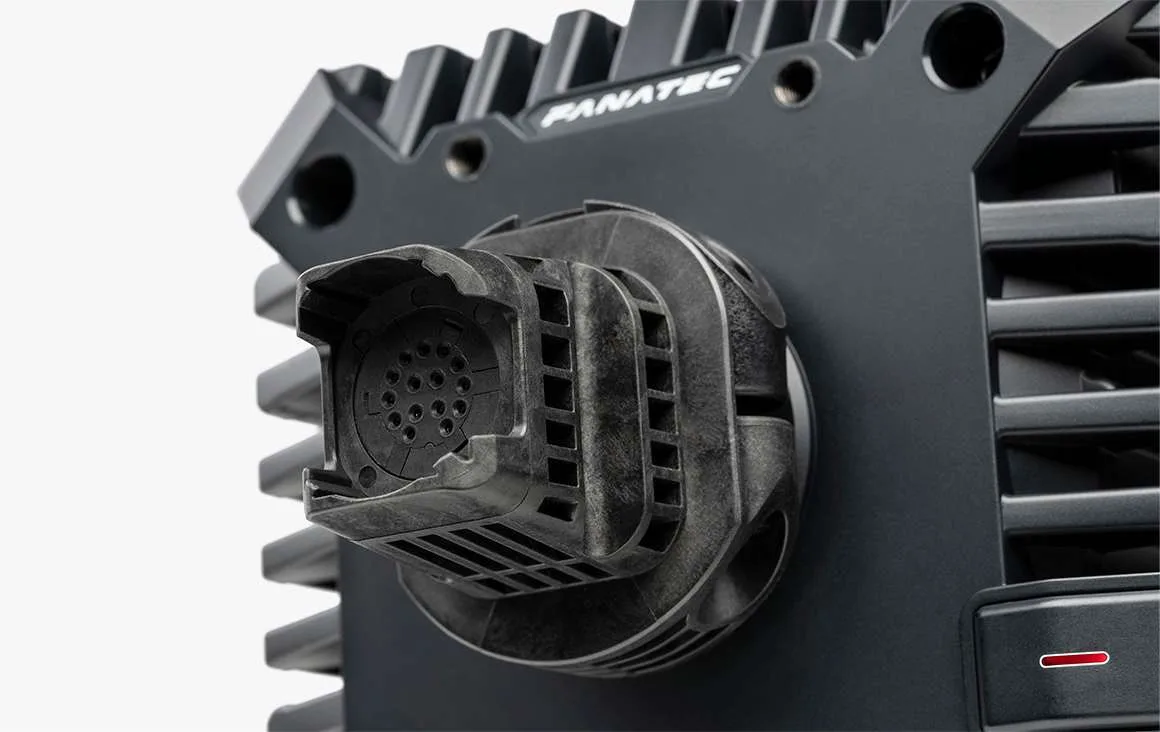
The Fanatec CSL DD with QR2 is the base alone. The package contains the base, a preinstalled QR2 Lite quick release, a 90 W power supply, four T-nuts for rail mounting and a USB cable. You add your own wheel and pedals, and a clamp if you plan to use a desk. That makes the Fanatec route more flexible but also more expensive once the setup is complete.
The MOZA R5 bundle: base, ES wheel, pedals and desk clamps (Image: MOZA Racing)The CSL DD base and its power supply (Image: Fanatec)
Force Feedback: Close on Paper, Different Ceilings
The R5 peaks at 5.5 Nm. The CSL DD peaks at 5 Nm out of the box, and Fanatec’s Boost Kit 180 (sold separately) unlocks the full 8 Nm. Out of the box the R5 has a slight edge in peak torque, while the CSL DD is the only one of the two with a path to more strength.
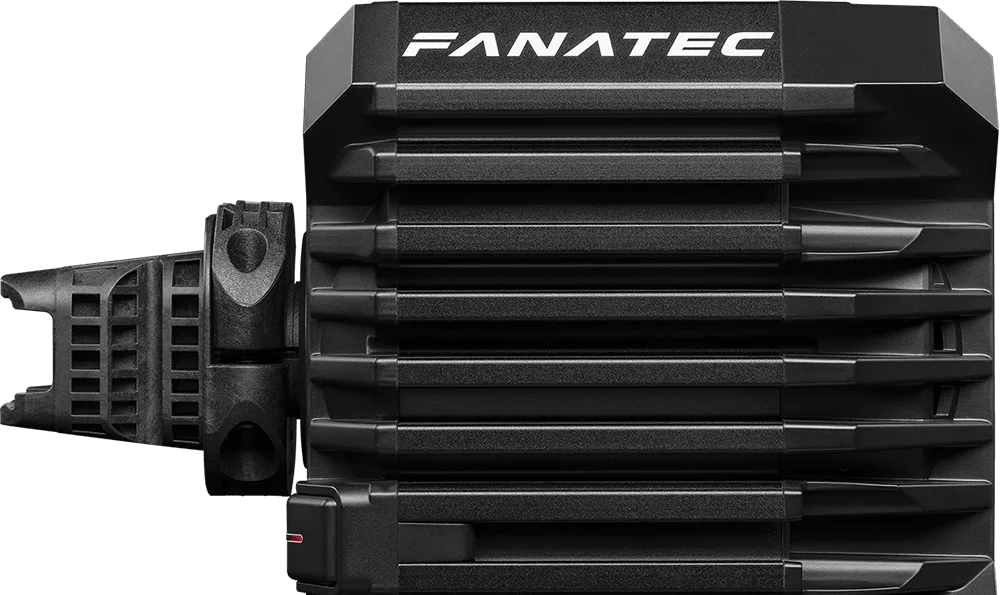
Torque is only part of the story. The Fanatec base uses patented FluxBarrier motor technology and an aluminum housing that acts as a passive heat sink. The CSL DD can feel slightly more detailed in both light and large effects, though the overall feel of the two bases is similar. For most entry-level drivers, the difference in detail is smaller than the difference in wheel and pedal quality you pair with either base.
Platforms: Moza Is PC Only, Fanatec Reaches Xbox
This is the clearest dividing line. The Moza R5 works with Windows PCs only. The CSL DD is designed for Windows PC and also works with Xbox Series X|S and Xbox One when you attach an Xbox-licensed steering wheel. PlayStation support is not included with this base, since Fanatec’s PlayStation path runs through its separate Gran Turismo DD Pro package.
If there is any chance you will race on a console, the Moza R5 is off the table. If you only race on PC, this point does not matter. Still deciding whether direct drive is worth it at all? Our Moza R5 vs Logitech G923 comparison sets the R5 against a gear-driven wheel.
Software and Tuning: Pit House vs Fanatec Tuning Menus
Moza uses its Pit House software on PC, plus a companion mobile app for saving and adjusting settings. The package also advertises a NexGen 4.0 force feedback algorithm and an iRacing 360 Hz mode. Fanatec splits tuning into a Standard Tuning Menu for beginners and an Advanced Tuning Menu for fine adjustments to force feedback characteristics.
Both are workable for a first direct drive setup. Moza’s all-in-one software and app are a little friendlier for newcomers who want one place to manage everything, while Fanatec’s menus favor drivers who already know what they want to change.
Mounting and Build: Fanatec Is More Flexible
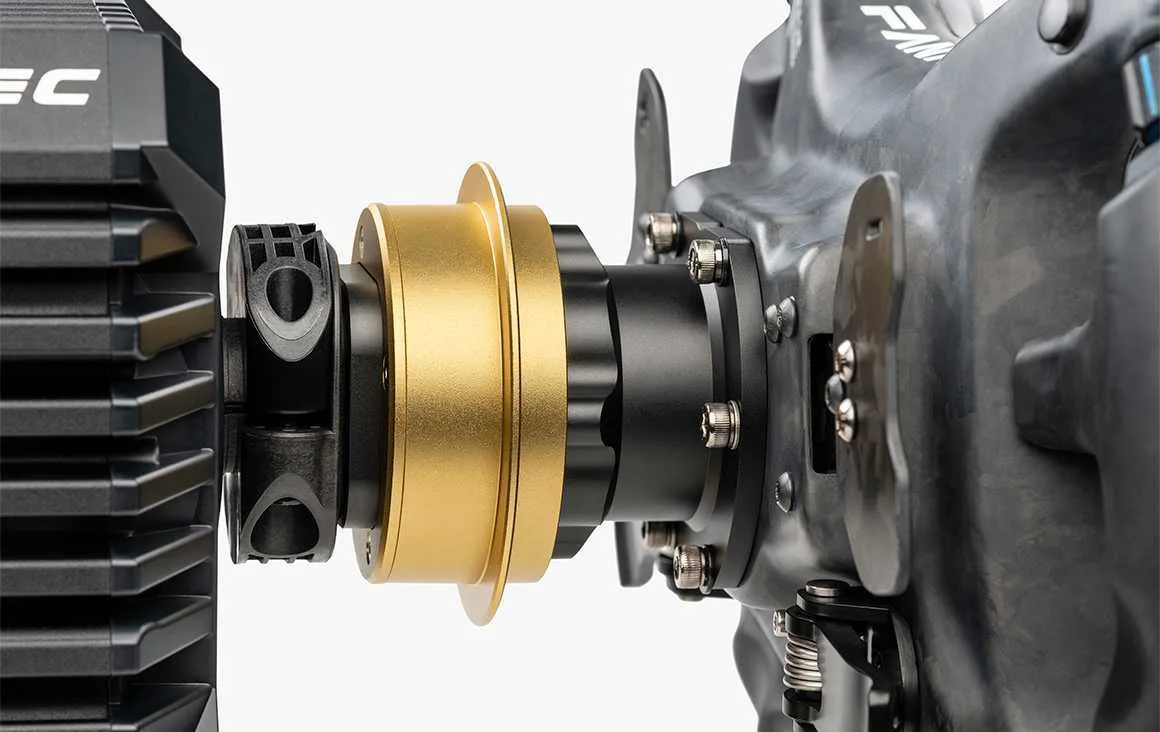
The CSL DD supports side, top and bottom mounting through T-nuts on a rail system, which suits an aluminum profile rig. The R5 supports bottom mounting only, and the included clamp covers desk use. Moza’s aluminum quick release and steel pedals make the kit feel substantial for the class, but it gives you fewer options if your cockpit is built around side mounting.
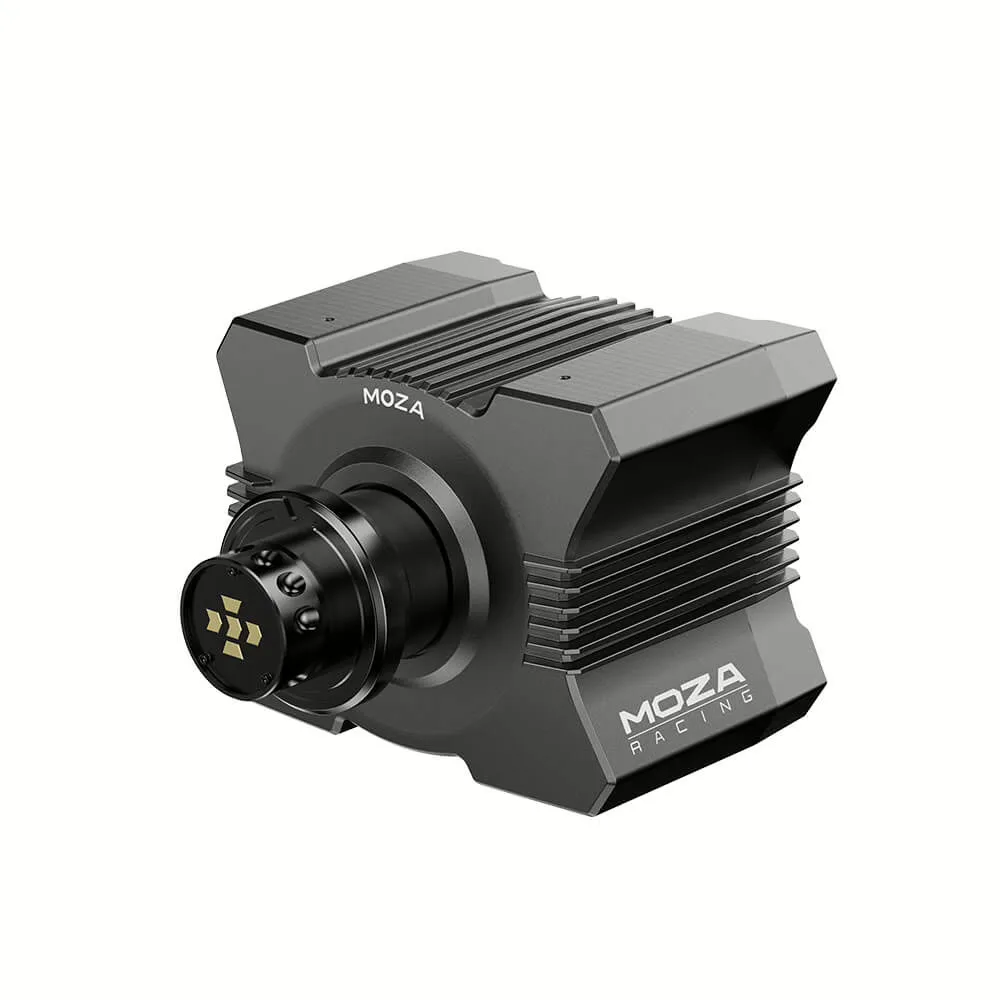
The MOZA R5 base (Image: MOZA Racing)The CSL DD side profile with its heat sink fins (Image: Fanatec)The CSL DD quick release coupling a wheel rim (Image: Fanatec)
Upgrade Path: Pick Your Ecosystem Carefully
Fanatec has the larger catalog of wheels, pedals and hubs, and it offers hubs that let you use some competing wheels with its bases. Moza wheels work with the R5, with the older V1 wheels as an exception because they use the earlier quick release.
If you expect to upgrade piece by piece for years, Fanatec gives you more places to go. If you want a good setup now and may replace it all later, the Moza kit is simpler.
Moza R5 vs Fanatec CSL DD: Full Specs
Feature
Moza R5 Bundle
Fanatec CSL DD (5 Nm, QR2)
Peak torque
5.5 Nm Wins
5 Nm (8 Nm with Boost Kit 180)
What is included
Base, 280 mm ES wheel, SR-P Lite pedals, desk clamp Wins
Base, QR2 Lite quick release, 90 W power supply, T-nuts, USB cable
Pedals
SR-P Lite (throttle and brake, no clutch)
Not included
Platforms
Windows PC only
Windows PC, Xbox with licensed wheel Wins
Mounting
Bottom mount, desk clamp included
Side, top and bottom mount Wins
Software
Pit House plus mobile app
Standard and Advanced Tuning Menus
Quick release
Moza proprietary
QR2
Upgrade path
Moza wheels and pedals
Boost Kit 180, wide Fanatec catalog Wins
And the Winner Is…
WinnerMoza R5 Bundle
The Fanatec CSL DD is the stronger platform. It reaches Xbox, mounts in more ways, can grow to 8 Nm with the Boost Kit 180 and sits inside a much larger accessory catalog, so anyone planning a long-term rig or racing on a console should lean its way. Even so, the Moza R5 bundle is the better answer for most people searching Moza R5 vs Fanatec CSL DD, because it gives a PC driver the base, wheel, pedals and clamp in one purchase at slightly higher peak torque. You can start racing the day it arrives instead of shopping for parts. Choose the CSL DD if you need Xbox support or flexible mounting, and choose the Moza if you only race on PC and want the simplest complete start.
Buy the Moza R5 bundle if you race on a PC, want one box and do not plan to move to a console. Buy the Fanatec CSL DD if you want Xbox support, side mounting or a clear route to 8 Nm, and you are fine paying for a wheel and pedals separately. Skip both if you only race occasionally with a gamepad, because a direct drive setup needs desk or cockpit space and a real commitment to sim racing.
I'm Sean, and I write the comparisons on GameCuki. I cover anything gamers weigh up before buying: consoles and handhelds, PC components and gaming laptops, monitors, controllers, headsets and accessories, plus subscriptions and services like Game Pass and PlayStation Plus. I put both options on the same checklist, using official specs, professional reviews and owner feedback, and I only mention what owners say when at least two of them report the same thing. Every comparison ends with one clear verdict and the type of player each option suits. I don't accept free products or payment from brands, and what I write comes from research, not my own use of the products. You can read my full process on our How We Review page.
Areas of Focus
Controller Match-UpsHeadset Match-UpsConsole vs. ConsoleSpecs & Latency