

Frame rates in modern games depend on two parts, the graphics card and the processor, and picking the best CPU for gaming means matching the second to the first. A faster chip pays off most at 1080p and 1440p on a high-refresh monitor, while 4K leans on the GPU. These thirteen picks cover AMD and Intel at every budget, from an integrated-graphics starter chip to the fastest X3D parts.
Best CPU for Gaming in 2026
GameCuki is reader-supported. When you buy through links on our site, we may earn an affiliate commission at no extra cost to you. As an Amazon Associate I earn from qualifying purchases. Learn more.
Our Top Picks
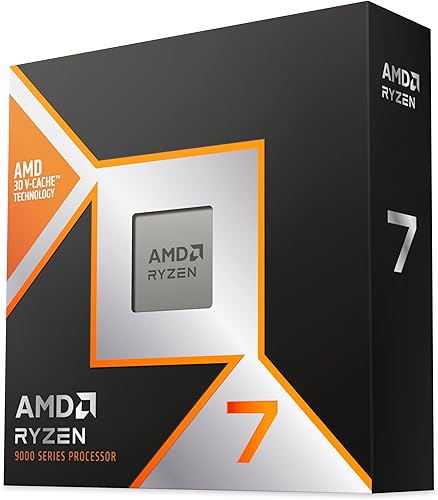
Best Overall for Gaming
AMD Ryzen 7 9800X3D
Bottom line: The fastest gaming chip most players should consider, with eight cores, 96MB of L3 cache and lower temperatures than Intel's flagships, for anyone building a high-refresh gaming PC.
- Beats Intel's Core i9-14900K in games by roughly 30 percent on average
- Smooth 1% low frame rates that help even when the GPU sets the limit
- 96MB of L3 cache in AMD's second-generation 3D V-Cache design
- Runs far cooler and draws less power than Intel's flagship chips
- Takes well to undervolting through Curve Optimizer
- Fully unlocked for overclocking
- Productivity speed in line with other eight-core chips
- Similarly priced chips are faster in heavy productivity work
- Gains shrink at 4K, where the graphics card sets the pace
- No cooler in the box
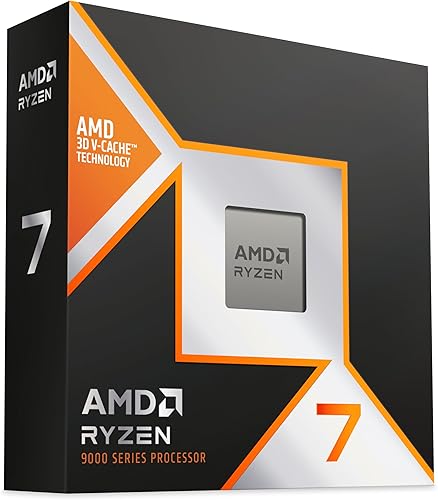
Best for Maximum Frame Rates
AMD Ryzen 7 9850X3D
Bottom line: A slightly higher-clocked 9800X3D that is the fastest gaming chip in the lineup, for players who want the top frame rate and accept paying extra for a small gain.
- Fastest gaming CPU on the market by a small margin
- Averages around 3.3 percent more frame rate than the 9800X3D
- Boost clock of up to 5.6GHz
- 96MB of L3 cache
- Same 120W TDP as the 9800X3D
- Unlocked for overclocking
- Drops into AM5 motherboards
- The gain over the 9800X3D is small for the extra cost
- No cooler included
- Gains shrink at 4K, where the graphics card sets the limit

Best for AM5 Gaming on a Tighter Budget
AMD Ryzen 7 7800X3D
Bottom line: The previous-generation X3D flagship still leads many newer chips in games, for builders who want 3D V-Cache without paying 9800X3D money.
- Around 10 percent faster in games than Intel's Core Ultra 7 270K Plus
- Eight cores and 16 threads for gaming plus background apps
- 96MB of L3 cache
- Same AM5 socket as newer Ryzen chips, so boards carry over
- Built on a 5nm process
- Plenty of motherboard choices on the mature AM5 platform
- First-generation cache design runs at lower clocks than the 9800X3D
- No cooler included

Best for Gaming and Heavy Workloads
AMD Ryzen 9 9950X3D2
Bottom line: A 16-core chip with 3D V-Cache on both dies that matches the 9800X3D in games and adds workstation muscle, for players who also render, compile or edit.
- Matches the Ryzen 7 9800X3D in game frame rates
- 3D V-Cache on both eight-core dies for 192MB of L3
- About 4 percent faster than the 9950X3D in multithreaded work
- Some specialized workloads gain much more, around 26 percent in data science tasks
- Boost clock of up to 5.6GHz
- Unlocked multiplier for overclocking
- Works with existing AM5 motherboards
- Very expensive
- Higher power consumption than the 9800X3D
- Gaming performance is no better than the 9800X3D

Best Intel Pick for Gaming and Creating
Intel Core Ultra 7 270K Plus
Bottom line: A 24-core Intel chip that keeps pace with Ryzen 7 in games and wins in multithreaded work, for players who stream, edit or build.
- Beats the Ryzen 7 9700X in games by around 2.4 percent
- Narrowly outpaces the Core i7-14700K in games
- Intel's Binary Optimization Tool adds an average of about 8 percent in supported games
- Near the top of multithreaded rankings, more than doubling the 9700X
- 24 cores handle streaming and recording alongside a game
- Works with existing 800-series LGA 1851 boards
- Trails the Ryzen 7 7800X3D by around 10 percent in games
- Higher power demands than the Ryzen alternatives
- LGA 1851 is nearing the end of its life

Best for Cool, Quiet Gaming PCs
AMD Ryzen 7 9700X
Bottom line: An efficient eight-core Zen 5 chip that ties Intel's Core i9-14900K in games while staying easy to cool, for compact or quiet builds.
- Ties the Core i9-14900K in games and beats the Core i7-14700K
- Low 65W TDP keeps cooling needs modest
- Strong single-threaded speed
- Native AVX-512 support
- A 105W mode in the BIOS adds productivity speed and stays under warranty
- Works in B850, B840 and older B650 boards
- Supports DDR5-5600 memory
- No cooler in the box
- Trails Intel in heavily threaded work

Best Intel Value Pick
Intel Core Ultra 5 250K Plus
Bottom line: An 18-core Intel chip that matches the Ryzen 5 9600X in games and doubles its multithreaded speed, for budget builders who also do other work.
- About 1 percent faster than the Ryzen 5 9600X in games at 1080p
- Around 9 percent faster than the Core Ultra 5 245K
- Leads the 9600X by 10 percent in Cyberpunk 2077 with iBOT
- Leads by 12 percent in Doom: The Dark Ages
- More than doubles the 9600X in multithreaded work
- Unlocked for overclocking
- Officially supports DDR5 up to 7200MT/s
- LGA 1851 is a dead-end platform
- Some games, such as F1 2024, still struggle on Arrow Lake

Best Value X3D
AMD Ryzen 5 7600X3D
Bottom line: Most of the X3D gaming advantage in a six-core chip that sips power, for players who put games ahead of everything else.
- Only about 4.5 percent slower than the Ryzen 7 7800X3D in games
- Around 22 percent faster in games than the Ryzen 5 7600X
- Often draws under 70W while gaming
- Easy to cool
- Outpaces the more expensive Ryzen 7 9700X in games
- Works in A620, B650, B840, B850, X670 and X870 boards
- Locked multiplier limits overclocking to PBO
- Weak productivity next to Intel's 250K Plus, which is twice as fast in multithreaded work
- No cooler in the box

Best Budget AM5 Chip
AMD Ryzen 5 7600X
Bottom line: A six-core AM5 processor with PCIe 5.0 support at a budget price, for first-time builders who want a platform that can grow.
- Offers about 90 percent of the Ryzen 5 9600X's performance
- Boost clock of up to 5.3GHz
- PCIe 5.0 support
- Fits 600- and 800-series AM5 boards
- 65W Eco mode available through Ryzen Master
- Easy upgrade path to faster AM5 chips later
- DDR5 only, which adds to build cost
- High power draw for a six-core part
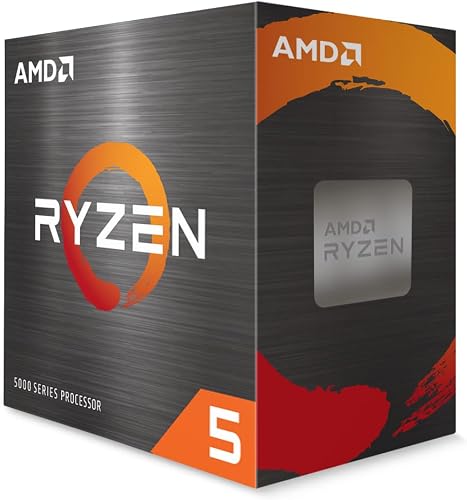
Best for Budget AM4 Builds
AMD Ryzen 5 5600
Bottom line: A cooler-included six-core chip that suits older AM4 boards, for upgrading a first-generation Ryzen system cheaply.
- Matches the gaming performance of the more expensive Ryzen 7 5800X
- Includes a Wraith Stealth cooler
- Low 65W TDP keeps it cool and quiet
- Drops into many 300-, 400- and 500-series boards
- Fully overclockable
- Handles streaming and high-refresh play
- No integrated graphics
- AM4 is a dead end for future upgrades

Best for DDR4 Gaming Upgrades
AMD Ryzen 7 5800X3D
Bottom line: The fastest gaming CPU for DDR4 platforms, for AM4 owners who want a big upgrade without buying new memory or a board.
- Fastest gaming CPU you can run on DDR4 memory
- Drops into existing AM4 boards with DDR4
- Eight cores and 16 threads
- 100MB of cache
- Highly efficient
- Keeps your DDR4 kit and board in service
- Limited productivity performance
- Relatively expensive for its age
- Dead-end AM4 platform

Best for Intel DDR4 Builds
Intel Core i7-14700K
Bottom line: A 20-core Intel chip that works with either DDR4 or DDR5 and matches the 5800X3D with DDR4, for LGA 1700 owners.
- Matches the Ryzen 7 5800X3D in games when paired with DDR4
- Far better application performance than the 5800X3D
- 28 threads for streaming and heavy multitasking
- Boards available for both DDR4 and DDR5
- Boost clock of up to 5.6GHz
- Wide choice of boards and memory
- Draws a lot of power, up to 253W
- Raptor Lake firmware bug can degrade the chip, so update the BIOS
- DDR4 costs about 13 percent of gaming performance versus DDR5

Best for Gaming Without a Graphics Card
AMD Ryzen 5 8600G
Bottom line: A six-core chip with RDNA 3 graphics built in that handles light gaming, for starter PCs and small builds that skip a graphics card.
- Handles solid 720p and passable 1080p gaming in some titles
- AMD Hyper-RX features include Radeon Super Resolution and Fluid Motion Frames
- Delivers about 90 percent of the Ryzen 7 8700G's performance for much less
- Low 65W TDP
- Bundled cooler
- Works with B650 and A620 boards
- Requires DDR5, which adds cost
- AM5 motherboards remain pricey
- Limited to lower settings and some games at 1080p
Table of Contents
Best CPU for Gaming: Our Picks in Detail
1
Best Overall for Gaming
AMD Ryzen 7 9800X3D
Bottom line: The fastest gaming chip most players should consider, with eight cores, 96MB of L3 cache and lower temperatures than Intel's flagships, for anyone building a high-refresh gaming PC.
AMD's Ryzen 7 9800X3D is the chip that most high-end gaming builds now start from.
Pros & Cons
Pros
- Beats Intel's Core i9-14900K in games by roughly 30 percent on average
- Smooth 1% low frame rates that help even when the GPU sets the limit
- 96MB of L3 cache in AMD's second-generation 3D V-Cache design
- Runs far cooler and draws less power than Intel's flagship chips
- Takes well to undervolting through Curve Optimizer
- Fully unlocked for overclocking
- Productivity speed in line with other eight-core chips
Cons
- Similarly priced chips are faster in heavy productivity work
- Gains shrink at 4K, where the graphics card sets the pace
- No cooler in the box
Why We Picked It
Moving the 3D V-Cache chiplet underneath the compute die lets the heat spreader sit directly on the cores, which allows higher clocks than earlier X3D parts. The result is a gaming chip that leads Intel's current flagship by around 35 percent in average frame rate and does it with modest power draw. Because it runs cool, it does not demand an expensive cooler, board or power supply.
Who It's For
You play shooters, esports titles or simulation-heavy games at 1080p or 1440p on a high-refresh monitor and want the most frame rate your graphics card can use. You also stream or run background apps, and you would rather not buy a 16-core chip to do it.
Pair it with a capable AM5 board. Our best motherboard for the 9800X3D guide covers boards that suit it.
Specs & Configurations
- Cores/Threads
- 8/16
- Clocks
- 4.7GHz base, up to 5.2GHz boost
- Cache
- 96MB L3 with 3D V-Cache
- TDP
- 120W
- Socket
- AM5
Get It Now
Check Price on Amazon
2
Best for Maximum Frame Rates
AMD Ryzen 7 9850X3D
Bottom line: A slightly higher-clocked 9800X3D that is the fastest gaming chip in the lineup, for players who want the top frame rate and accept paying extra for a small gain.
The Ryzen 7 9850X3D launched in January 2026 as the new top of AMD's eight-core gaming range.
Pros & Cons
Pros
- Fastest gaming CPU on the market by a small margin
- Averages around 3.3 percent more frame rate than the 9800X3D
- Boost clock of up to 5.6GHz
- 96MB of L3 cache
- Same 120W TDP as the 9800X3D
- Unlocked for overclocking
- Drops into AM5 motherboards
Cons
- The gain over the 9800X3D is small for the extra cost
- No cooler included
- Gains shrink at 4K, where the graphics card sets the limit
Why We Picked It
It keeps the 9800X3D's eight cores and 96MB of cache and raises the boost clock to 5.6GHz. That adds only about 3.3 percent to average frame rate, so it is a refinement, not a leap.
Who It's For
You want the highest frame rate an eight-core chip can deliver, you play at a refresh rate where the CPU is the limit, and the price difference does not bother you. If you simply want a very fast gaming CPU, the 9800X3D gives nearly the same result for less.
Specs & Configurations
- Cores/Threads
- 8/16
- Clocks
- 4.7GHz base, up to 5.6GHz boost
- Cache
- 96MB L3
- TDP
- 120W
- Socket
- AM5
Get It Now
Check Price on Amazon
3
Best for AM5 Gaming on a Tighter Budget
AMD Ryzen 7 7800X3D
Bottom line: The previous-generation X3D flagship still leads many newer chips in games, for builders who want 3D V-Cache without paying 9800X3D money.
Even after the 9000-series launch, the Ryzen 7 7800X3D remains a very strong gaming processor.
Pros & Cons
Pros
- Around 10 percent faster in games than Intel's Core Ultra 7 270K Plus
- Eight cores and 16 threads for gaming plus background apps
- 96MB of L3 cache
- Same AM5 socket as newer Ryzen chips, so boards carry over
- Built on a 5nm process
- Plenty of motherboard choices on the mature AM5 platform
Cons
- First-generation cache design runs at lower clocks than the 9800X3D
- No cooler included
Why We Picked It
The cache sits on top of the cores, which holds clock speeds below non-X3D chips, but the extra L3 is what drives its frame rates. It is also the chip that the cheaper 7600X3D trails by only about 4.5 percent, which shows how much of the gain comes from the cache.
Who It's For
You are building on AM5 and care about gaming first. A 7800X3D gives you the cache-driven frame rates of the X3D family, and you can move to a newer AM5 chip later without changing the board.
Specs & Configurations
- Cores/Threads
- 8/16
- Clocks
- 4.2GHz base, up to 5GHz boost
- Cache
- 96MB L3 with 3D V-Cache
- TDP
- 120W
- Socket
- AM5
Get It Now
Check Price on Amazon
4
Best for Gaming and Heavy Workloads
AMD Ryzen 9 9950X3D2
Bottom line: A 16-core chip with 3D V-Cache on both dies that matches the 9800X3D in games and adds workstation muscle, for players who also render, compile or edit.
Gaming and heavy creative work usually pull a PC in different directions, and the Ryzen 9 9950X3D2 tries to cover both.
Pros & Cons
Pros
- Matches the Ryzen 7 9800X3D in game frame rates
- 3D V-Cache on both eight-core dies for 192MB of L3
- About 4 percent faster than the 9950X3D in multithreaded work
- Some specialized workloads gain much more, around 26 percent in data science tasks
- Boost clock of up to 5.6GHz
- Unlocked multiplier for overclocking
- Works with existing AM5 motherboards
Cons
- Very expensive
- Higher power consumption than the 9800X3D
- Gaming performance is no better than the 9800X3D
Why We Picked It
Each of its two eight-core dies carries 3D V-Cache, so cache-hungry work gets the benefit on every core. For games, it lands in the same place as the cheaper 9800X3D.
Who It's For
You game seriously and also render video, run simulations or compile code on the same machine, and you want one PC to do all of it. If your use is gaming alone, the extra cores will sit idle.
Specs & Configurations
- Cores/Threads
- 16/32
- Clocks
- 4.3GHz base, up to 5.6GHz boost
- Cache
- 192MB L3 with 3D V-Cache on both dies
- TDP
- 200W
- Socket
- AM5
Get It Now
Check Price on Amazon
5
Best Intel Pick for Gaming and Creating
Intel Core Ultra 7 270K Plus
Bottom line: A 24-core Intel chip that keeps pace with Ryzen 7 in games and wins in multithreaded work, for players who stream, edit or build.
Intel's Core Ultra 7 270K Plus brings a flagship-class core count to the middle of the lineup.
Pros & Cons
Pros
- Beats the Ryzen 7 9700X in games by around 2.4 percent
- Narrowly outpaces the Core i7-14700K in games
- Intel's Binary Optimization Tool adds an average of about 8 percent in supported games
- Near the top of multithreaded rankings, more than doubling the 9700X
- 24 cores handle streaming and recording alongside a game
- Works with existing 800-series LGA 1851 boards
Cons
- Trails the Ryzen 7 7800X3D by around 10 percent in games
- Higher power demands than the Ryzen alternatives
- LGA 1851 is nearing the end of its life
Why We Picked It
It pairs 8 performance cores with 16 efficiency cores and lifts the die-to-die and fabric speeds over the original Arrow Lake chips. In games, it sits close to the 9700X and ahead of the 14700K, while multithreaded speed is a real strength.
Who It's For
You split your time between gaming and CPU-heavy work such as video editing, and you already own or plan to buy an 800-series Intel board. Z890 boards unlock overclocking, but B and H boards work too.
Specs & Configurations
- Cores/Threads
- 24/24 (8P+16E)
- Clocks
- up to 5.5GHz boost
- Cache
- 76MB combined L2 and L3
- TDP
- 125W base power
- Socket
- LGA 1851
Get It Now
Check Price on Amazon
6
Best for Cool, Quiet Gaming PCs
AMD Ryzen 7 9700X
Bottom line: An efficient eight-core Zen 5 chip that ties Intel's Core i9-14900K in games while staying easy to cool, for compact or quiet builds.
A rough launch hurt the Ryzen 7 9700X, but firmware and operating system updates have fixed most of it.
Pros & Cons
Pros
- Ties the Core i9-14900K in games and beats the Core i7-14700K
- Low 65W TDP keeps cooling needs modest
- Strong single-threaded speed
- Native AVX-512 support
- A 105W mode in the BIOS adds productivity speed and stays under warranty
- Works in B850, B840 and older B650 boards
- Supports DDR5-5600 memory
Cons
- No cooler in the box
- Trails Intel in heavily threaded work
Why We Picked It
Today it matches much more expensive Intel chips in games while sipping power, which makes it easy to cool and easy to place in a small case. It also gives you an AM5 platform with room to upgrade.
Who It's For
You want a capable gaming CPU that runs cool and quiet, perhaps in a small-form-factor case, and you do not need extreme multithreaded speed. A B850 or B650 board is the sensible partner.
Specs & Configurations
- Cores/Threads
- 8/16
- Clocks
- 3.8GHz base, up to 5.5GHz boost
- Cache
- 40MB total
- TDP
- 65W (105W option in BIOS)
- Socket
- AM5
Get It Now
Check Price on Amazon
7
Best Intel Value Pick
Intel Core Ultra 5 250K Plus
Bottom line: An 18-core Intel chip that matches the Ryzen 5 9600X in games and doubles its multithreaded speed, for budget builders who also do other work.
The Core Ultra 5 250K Plus brings Intel back into the value conversation.
Pros & Cons
Pros
- About 1 percent faster than the Ryzen 5 9600X in games at 1080p
- Around 9 percent faster than the Core Ultra 5 245K
- Leads the 9600X by 10 percent in Cyberpunk 2077 with iBOT
- Leads by 12 percent in Doom: The Dark Ages
- More than doubles the 9600X in multithreaded work
- Unlocked for overclocking
- Officially supports DDR5 up to 7200MT/s
Cons
- LGA 1851 is a dead-end platform
- Some games, such as F1 2024, still struggle on Arrow Lake
Why We Picked It
It prices like an entry chip but often performs like chips that cost twice as much. Its efficiency cores give it multithreaded speed that six-core Ryzen parts cannot match.
Who It's For
You have a mid-range graphics card, want solid frame rates, and also use your PC for streaming, editing or other CPU-heavy tasks. A Z890 board gets the most from it, though B and H boards still work.
Specs & Configurations
- Cores/Threads
- 18/18 (6P+12E)
- Clocks
- up to 5.3GHz boost
- Cache
- 60MB combined L2 and L3
- TDP
- 125W base power
- Socket
- LGA 1851
Get It Now
Check Price on Amazon
8
Best Value X3D
AMD Ryzen 5 7600X3D
Bottom line: Most of the X3D gaming advantage in a six-core chip that sips power, for players who put games ahead of everything else.
The Ryzen 5 7600X3D proves that cache matters more than core count in many games.
Pros & Cons
Pros
- Only about 4.5 percent slower than the Ryzen 7 7800X3D in games
- Around 22 percent faster in games than the Ryzen 5 7600X
- Often draws under 70W while gaming
- Easy to cool
- Outpaces the more expensive Ryzen 7 9700X in games
- Works in A620, B650, B840, B850, X670 and X870 boards
Cons
- Locked multiplier limits overclocking to PBO
- Weak productivity next to Intel's 250K Plus, which is twice as fast in multithreaded work
- No cooler in the box
Why We Picked It
Six cores and 96MB of L3 give it frame rates that beat pricier chips. It gives up multithreaded and single-threaded speed to do it.
Who It's For
Gaming is the main thing you use the PC for and you want the best frame rate for the money. If you edit video or stream heavily, the weak productivity speed will show.
Specs & Configurations
- Cores/Threads
- 6/12
- Clocks
- 4.1GHz base, up to 4.7GHz boost
- Cache
- 96MB L3 plus 6MB L2
- TDP
- 65W
- Socket
- AM5
Get It Now
Check Price on Amazon
9
Best Budget AM5 Chip
AMD Ryzen 5 7600X
Bottom line: A six-core AM5 processor with PCIe 5.0 support at a budget price, for first-time builders who want a platform that can grow.
Intel's new Arrow Lake Refresh chips pushed the Ryzen 5 7600X down to a very low price.
Pros & Cons
Pros
- Offers about 90 percent of the Ryzen 5 9600X's performance
- Boost clock of up to 5.3GHz
- PCIe 5.0 support
- Fits 600- and 800-series AM5 boards
- 65W Eco mode available through Ryzen Master
- Easy upgrade path to faster AM5 chips later
Cons
- DDR5 only, which adds to build cost
- High power draw for a six-core part
Why We Picked It
It is marginally slower than the 9600X but cheaper, and the AM5 socket means you can upgrade later without a new board.
Who It's For
You are building a gaming PC on a budget and want a modern platform instead of a dead-end one. Pair it with a B650 board and a mid-range graphics card.
Specs & Configurations
- Cores/Threads
- 6/12
- Clocks
- 4.7GHz base, up to 5.3GHz boost
- TDP
- 105W
- Memory
- DDR5 only
- Socket
- AM5
Get It Now
Check Price on Amazon
10
Best for Budget AM4 Builds
AMD Ryzen 5 5600
Bottom line: A cooler-included six-core chip that suits older AM4 boards, for upgrading a first-generation Ryzen system cheaply.
For anyone still on an older Ryzen board, the Ryzen 5 5600 is the lowest-cost way to a real upgrade.
Pros & Cons
Pros
- Matches the gaming performance of the more expensive Ryzen 7 5800X
- Includes a Wraith Stealth cooler
- Low 65W TDP keeps it cool and quiet
- Drops into many 300-, 400- and 500-series boards
- Fully overclockable
- Handles streaming and high-refresh play
Cons
- No integrated graphics
- AM4 is a dead end for future upgrades
Why We Picked It
It performs close to its X sibling and costs less. Existing AM4 boards and DDR4 memory keep the total cost down while DDR5 prices stay high.
Who It's For
You have a Ryzen 1000, 2000 or 3000 system and a 500-series board, and you want a better gaming CPU without a new platform. You need a graphics card, because this chip has no integrated graphics.
Specs & Configurations
- Cores/Threads
- 6/12
- Clocks
- 3.7GHz base, up to 4.6GHz boost
- TDP
- 65W
- Memory
- DDR4
- Socket
- AM4
Get It Now
Check Price on Amazon
11
Best for DDR4 Gaming Upgrades
AMD Ryzen 7 5800X3D
Bottom line: The fastest gaming CPU for DDR4 platforms, for AM4 owners who want a big upgrade without buying new memory or a board.
An AM4 board with DDR4 does not have to mean slow frame rates.
Pros & Cons
Pros
- Fastest gaming CPU you can run on DDR4 memory
- Drops into existing AM4 boards with DDR4
- Eight cores and 16 threads
- 100MB of cache
- Highly efficient
- Keeps your DDR4 kit and board in service
Cons
- Limited productivity performance
- Relatively expensive for its age
- Dead-end AM4 platform
Why We Picked It
The 3D V-Cache pushes DDR4 gaming performance as far as it can go. It is a straightforward drop-in upgrade for older AM4 builds.
Who It's For
You already own an AM4 board and DDR4 and want the biggest gaming upgrade without replatforming. If you are building fresh, an AM5 chip is a better start.
Specs & Configurations
- Cores/Threads
- 8/16
- Clocks
- 3.4GHz base, up to 4.5GHz boost
- Cache
- 100MB combined
- TDP
- 105W
- Socket
- AM4 with DDR4
Get It Now
Check Price on Amazon
12
Best for Intel DDR4 Builds
Intel Core i7-14700K
Bottom line: A 20-core Intel chip that works with either DDR4 or DDR5 and matches the 5800X3D with DDR4, for LGA 1700 owners.
The Core i7-14700K is a high-core-count chip that does not force you onto DDR5.
Pros & Cons
Pros
- Matches the Ryzen 7 5800X3D in games when paired with DDR4
- Far better application performance than the 5800X3D
- 28 threads for streaming and heavy multitasking
- Boards available for both DDR4 and DDR5
- Boost clock of up to 5.6GHz
- Wide choice of boards and memory
Cons
- Draws a lot of power, up to 253W
- Raptor Lake firmware bug can degrade the chip, so update the BIOS
- DDR4 costs about 13 percent of gaming performance versus DDR5
Why We Picked It
With DDR4 it matches AMD's best DDR4 gaming chip and adds far more productivity speed. On DDR5 it does better still.
Who It's For
You are on an LGA 1700 board, probably with DDR4, and want a gaming upgrade that also helps with multitasking. Flash the latest BIOS first, and plan for a strong cooler.
Specs & Configurations
- Cores/Threads
- 20/28 (8P+12E)
- Clocks
- up to 5.6GHz boost
- Cache
- 33MB L3
- TDP
- 125W base, 253W max turbo
- Socket
- LGA 1700
Get It Now
Check Price on Amazon
13
Best for Gaming Without a Graphics Card
AMD Ryzen 5 8600G
Bottom line: A six-core chip with RDNA 3 graphics built in that handles light gaming, for starter PCs and small builds that skip a graphics card.
Graphics card prices make a chip with strong built-in graphics worth a look.
Pros & Cons
Pros
- Handles solid 720p and passable 1080p gaming in some titles
- AMD Hyper-RX features include Radeon Super Resolution and Fluid Motion Frames
- Delivers about 90 percent of the Ryzen 7 8700G's performance for much less
- Low 65W TDP
- Bundled cooler
- Works with B650 and A620 boards
Cons
- Requires DDR5, which adds cost
- AM5 motherboards remain pricey
- Limited to lower settings and some games at 1080p
Why We Picked It
Its RDNA 3 integrated graphics are enough for esports and older titles at reasonable settings. You can add a discrete graphics card later.
Who It's For
You are building a first PC or a compact one and want to play lighter games right away, with a graphics card added later. Set realistic expectations on resolution and quality.
Specs & Configurations
- Cores/Threads
- 6/12
- Clocks
- 4.3GHz base, up to 5.0GHz boost
- Graphics
- RDNA 3 integrated, 8 CUs
- TDP
- 65W
- Socket
- AM5
Get It Now
Check Price on AmazonHow to Choose a Gaming CPU
Cache, cores and clock speed
A good gaming chip balances all three. Large caches, such as AMD’s 3D V-Cache, give a clear edge in many games, mostly at 1080p and 1440p. Eight cores is enough for gaming, and extra cores help when you stream, record or run apps in the background. Clock speed matters, but it cannot be compared across architectures.
Match the CPU to your resolution
At 4K, the graphics card reaches its limit before the CPU does, so a mid-range chip such as a Ryzen 5, Core Ultra 5, Ryzen 7 or Core Ultra 7 is usually enough. A top X3D chip earns its price at 1080p with a high-end graphics card and a high-refresh monitor.
Platform and memory cost
Budget for the whole platform. DDR5 and AM5 or LGA 1851 boards cost more than an older AM4 setup, so keeping DDR4 can make sense if you already own it. AM5 has the longest runway, while LGA 1851 and AM4 are near the end.
Cooling
Some chips ship without a cooler, so plan to buy one. Fresh thermal paste helps a new cooler perform its best.
More Gaming CPU Guides
Still deciding between brands? Read our Intel vs AMD for gaming comparison for a head-to-head look.
Which Is the Best CPU for Gaming for You?
For most players, the Ryzen 7 9800X3D is the best CPU for gaming, because it delivers top frame rates without the cost of the 9850X3D or the heat of Intel’s flagships. If you also create content, the Core Ultra 7 270K Plus or the Ryzen 9 9950X3D2 give you more multithreaded speed. On a tight budget, the Ryzen 5 7600X3D and the Core Ultra 5 250K Plus stretch a small budget furthest, and AM4 owners should look at the Ryzen 5 5600 or the 5800X3D before buying a new platform.