GameCuki is reader-supported. When you buy through links on our site, we may earn an affiliate commission at no extra cost to you. As an Amazon Associate I earn from qualifying purchases. Learn more.
The RX 9070 XT vs RTX 5070 Ti decision looks like a tie on paper: both cards carry 16GB of VRAM on a 256-bit bus, both target 1440p and entry-level 4K, and both launched in early 2025. The real question is whether the RTX 5070 Ti’s ray tracing and DLSS advantages are worth the extra money over the Radeon.
Best for Raster Gaming and Value
Sapphire Pulse RX 9070 XT
Bottom LineBuy it if you play mostly rasterized games at 1440p and want RTX 5070 Ti-class frame rates for noticeably less money.
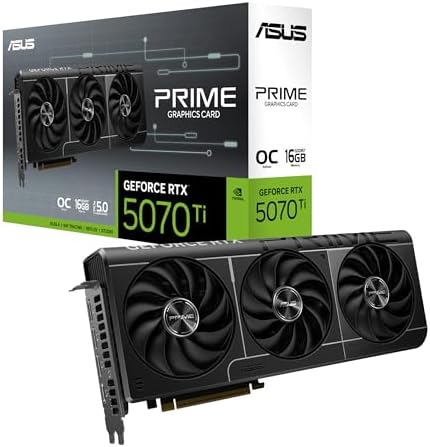
Neither AMD nor NVIDIA sells a reference version of these two cards, so you will be choosing a partner model such as the Sapphire Pulse or the ASUS Prime shown above. Cooler design and street price vary by model, and street price is where most of the gap between these cards comes from. Still deciding on the rest of the build? Our Intel vs AMD for gaming comparison covers the CPU side.
Price: The Radeon Launched Cheaper and Usually Still Is
At launch the RX 9070 XT carried a clearly lower MSRP than the RTX 5070 Ti. Retail pricing has drifted away from both launch prices since, but in recent market checks the Radeon has still sold for far less, and the GeForce has cost a sizable premium over it. Prices change daily, so compare current listings before you commit.
That premium is the core of this matchup. If the RTX 5070 Ti were a clear step up in speed, a higher price would be easy to justify. As the next section shows, it is not.
Raster Performance: Close to a Dead Heat at 1440p and 4K
Across a 52-game average at 1440p, the RTX 5070 Ti finishes about 1.4% ahead of the RX 9070 XT, which is within the margin of error. At native 4K the lead grows to roughly 4% (84 fps against 81 fps), helped by the GeForce’s faster memory. Neither card is stuck in a different performance tier.
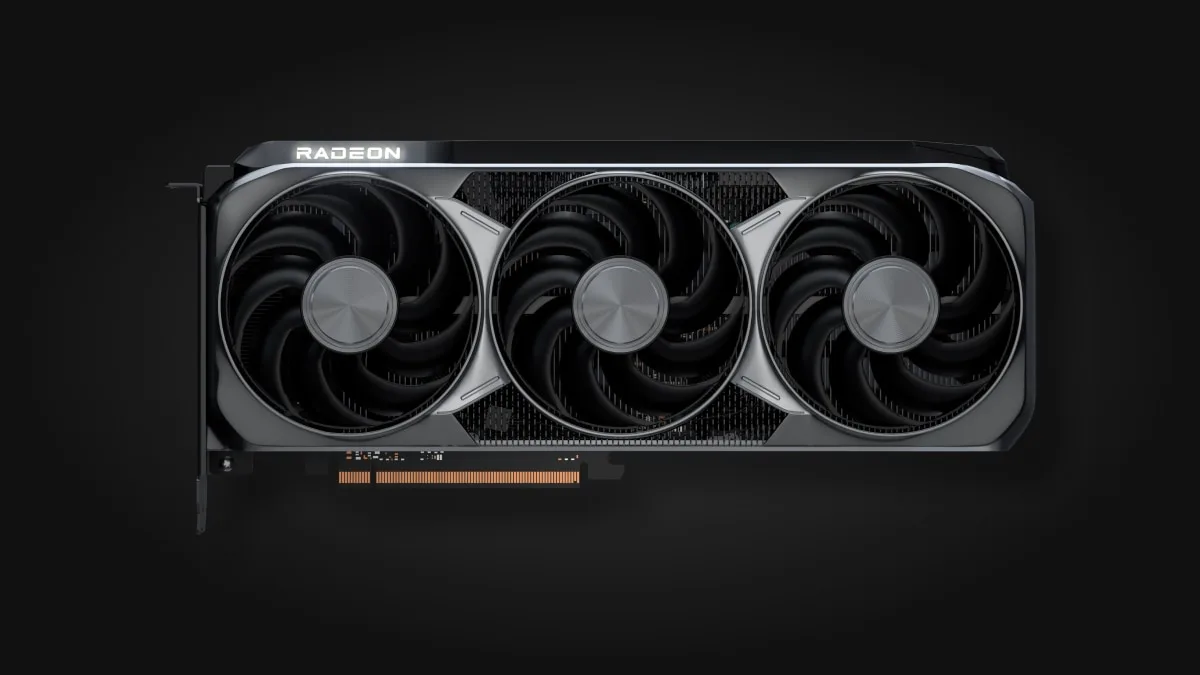
The Radeon RX 9070 XT, rendered by AMD. (Image: AMD)
The averages hide big swings in individual games. The Radeon leads in Pragmata, Assassin’s Creed Shadows, Call of Duty: Black Ops 7 and Resident Evil Requiem, and it posts stronger 1% lows in PUBG and Arc Raiders. The GeForce takes Dying Light: The Beast by roughly 17% to 19% and tends to win in competitive shooters such as Fortnite and PUBG at 4K.
Go with the RX 9070 XT if your library skews toward console ports and big rasterized releases, where it regularly matches or beats the more expensive card.
Ray Tracing: Where the RTX 5070 Ti Pulls Away
Ray tracing is the clearest split. With effects turned up, the RTX 5070 Ti leads by about 15% in Cyberpunk 2077 at 1440p, by 20% to 24% in F1 25, and by 56% in Indiana Jones and the Great Circle. In Doom with path tracing at 1440p, the GeForce runs about 63% faster, even though both cards struggle at those settings without upscaling.
The Radeon is not helpless here. In Pragmata, Resident Evil Requiem and Monster Hunter Wilds it ties or beats the RTX 5070 Ti with ray tracing on. Still, if you plan to run path-traced games at high settings, the RTX 5070 Ti is the safer choice.
Upscaling and Frame Generation: DLSS 4 vs FSR 4
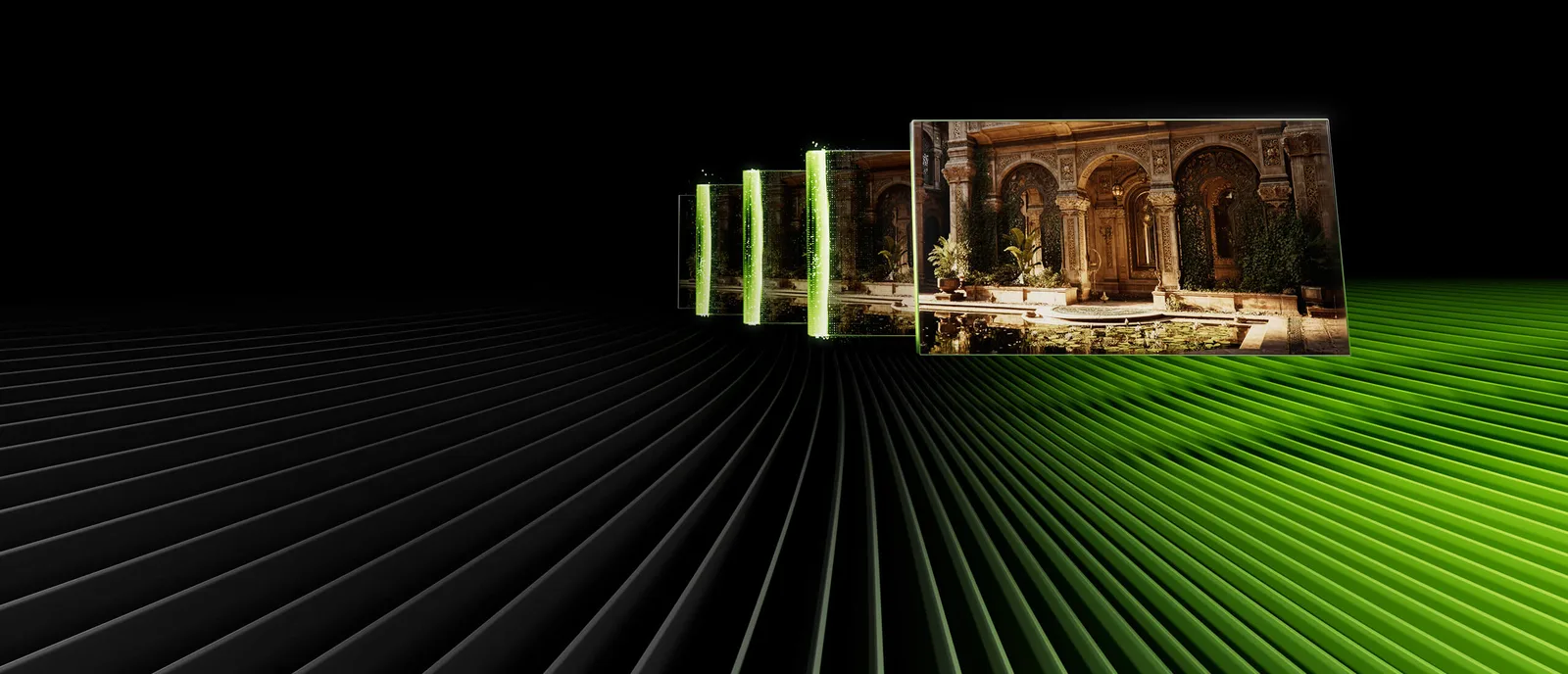
Both cards now use machine learning for upscaling. AMD’s FSR 4 is a big step up from earlier FSR versions, but DLSS has wider game support and, in image quality comparisons, still has the edge. The RTX 50 series also adds Multi Frame Generation, which can insert up to three generated frames between each rendered frame.
DLSS 4 Multi Frame Generation is exclusive to RTX 50 series cards. (Image: ASUS, NVIDIA artwork)
Frame generation has a catch: when the base frame rate is low, extra generated frames add latency and the game can feel sluggish even if the fps counter looks high. It works best when you already see close to 60 fps before generation.
Specs, Memory and Power Draw
Memory is the main hardware difference. The RTX 5070 Ti uses 16GB of GDDR7 at 28 Gbps for 896 GB/s of bandwidth, about 40% more than the 16GB of GDDR6 at 20 Gbps on the RX 9070 XT (640 GB/s). That extra bandwidth is why the GeForce scales a little better at 4K.
The Radeon also draws more power. Its typical consumption runs about 20% above the RTX 5070 Ti, so the GeForce is the more efficient card and may be easier to fit into a smaller power supply or a tight case.
Creator and AI Work: Another Win for NVIDIA
If the same PC doubles as a workstation, the RTX 5070 Ti has the advantage. It leads in Blender 3D rendering and in AI image generation. In Photoshop and video encoding the gap is only a few percent, so the lead matters most for 3D and AI users.
RX 9070 XT vs RTX 5070 Ti: Full Specs
Feature
RX 9070 XT
RTX 5070 Ti
Architecture
AMD RDNA 4
NVIDIA Blackwell
Release date
March 6, 2025
February 20, 2025
Memory
16GB GDDR6
16GB GDDR7 Wins
Memory speed
20 Gbps
28 Gbps Wins
Memory bus
256-bit
256-bit
Memory bandwidth
640 GB/s
896 GB/s Wins
Compute units
64 CU
70 SM
Board power
304 W
300 W
Typical power draw
Higher
Lower Wins
Interface
PCIe 5.0 x16
PCIe 5.0 x16
Upscaling
FSR 4
DLSS 4 with Multi Frame Generation Wins
Ray tracing
Good, trails in heavy RT
Stronger, leads in path tracing Wins
1440p raster average (52 games)
About 1.4% behind
About 1.4% ahead Wins
Launch MSRP gap
Lower launch price Wins
Higher launch price
Street price
Lower Wins
Higher
And the Winner Is…
WinnerAMD Radeon RX 9070 XT
The RTX 5070 Ti is the better technology: faster memory, stronger ray tracing, DLSS 4 and a real edge in 3D and AI work, and it draws less power. But raw speed is nearly identical across a wide game mix, and the Radeon often costs far less for that speed. For most players choosing between the RX 9070 XT and the RTX 5070 Ti, the savings buy a better monitor, more storage or a CPU upgrade that helps in more games than a small gap in average fps. Pick the RTX 5070 Ti if you want path tracing, lean on frame generation, or render and edit for work. Otherwise the RX 9070 XT is the smarter 16GB buy.
I'm Sean, and I write the comparisons on GameCuki. I cover anything gamers weigh up before buying: consoles and handhelds, PC components and gaming laptops, monitors, controllers, headsets and accessories, plus subscriptions and services like Game Pass and PlayStation Plus. I put both options on the same checklist, using official specs, professional reviews and owner feedback, and I only mention what owners say when at least two of them report the same thing. Every comparison ends with one clear verdict and the type of player each option suits. I don't accept free products or payment from brands, and what I write comes from research, not my own use of the products. You can read my full process on our How We Review page.
Areas of Focus
Controller Match-UpsHeadset Match-UpsConsole vs. ConsoleSpecs & Latency