

A standalone VR headset is the one kind of VR you can pull out of a bag, put on and play in the middle of a living room, with no tower, no cable and no base stations. The best standalone VR headset gives you a sharp picture, a deep game library and a battery that lasts long enough to matter. These four picks cover Meta’s two mainstream Quests and two high-end HTC headsets with eye tracking or a swappable battery. If you came here wondering whether you need a gaming PC at all, you don’t, and our best VR headset for PC guide covers the opposite case.
Best Standalone VR Headset in 2026
GameCuki is reader-supported. When you buy through links on our site, we may earn an affiliate commission at no extra cost to you. As an Amazon Associate I earn from qualifying purchases. Learn more.
Our Top Picks

Best Standalone Headset Overall
Meta Quest 3
Bottom line: Sharp pancake lenses, a fast chip and color passthrough in a headset that needs nothing else, for players who want the best all-around standalone experience.
- 2064 x 2208 pixels per eye behind pancake lenses keeps the picture clear from the center to the edges
- The Snapdragon XR2 Gen 2 chip and 8GB of RAM run big standalone games with quick load times
- Full-color passthrough cameras let you see your room and play mixed reality games
- 110-degree field of view feels wide and open for a headset you can wear anywhere
- Runs a large library of games and apps with no PC, and can still link to a PC when you want SteamVR
- Inside-out tracking needs no base stations, so setup is just putting it on
- Up to 120Hz refresh rate keeps head movement smooth
- Battery life is around two hours, so long sessions need a charger or a battery strap
- No eye tracking, so you miss out on eye-driven features found on pricier headsets
- Costs noticeably more than the Quest 3S, which plays the same games

Best Budget Standalone Headset
Meta Quest 3S
Bottom line: The same chip and library as the Quest 3 at a much lower cost, for first-time buyers who want standalone VR without the premium.
- Same Snapdragon XR2 Gen 2 chip and 8GB of RAM as the Quest 3, so games run as quickly
- Plays the same Quest games and apps as the Quest 3, from rhythm games to shooters
- Color passthrough cameras support mixed reality games and a view of your room
- Touch Plus controllers and hand tracking give you precise input
- Works fully standalone and also connects to a PC when you want SteamVR
- Up to 120Hz refresh rate keeps motion smooth
- Costs far less than every other headset on this list
- Fresnel lenses look softer and grainier than the Quest 3's pancake lenses
- IPD adjusts in three fixed positions, so people between settings may never get a perfect fit
- Controllers need to stay in view of the headset cameras for accurate tracking
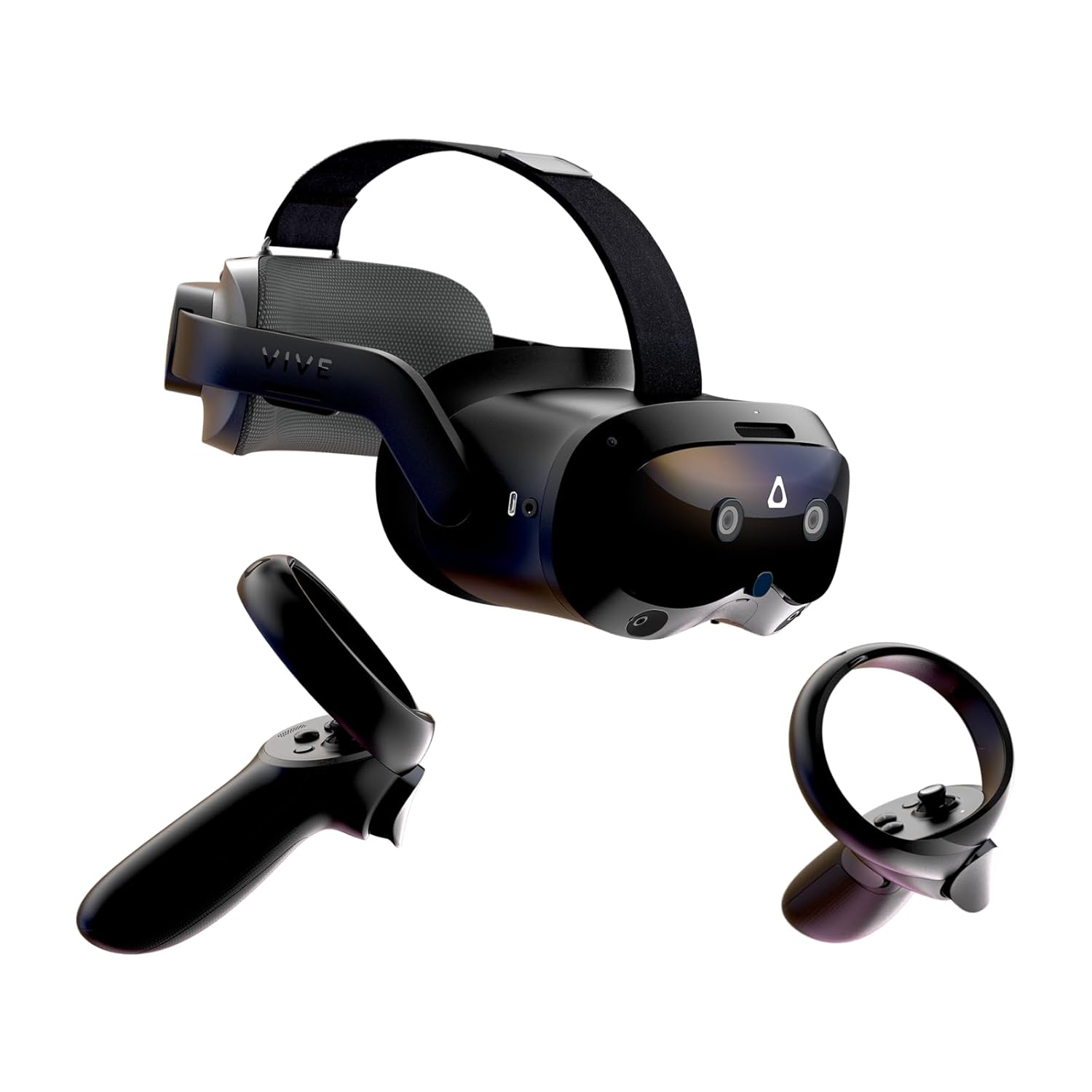
Best for Sharp Visuals and Eye Tracking
HTC Vive Focus Vision
Bottom line: A high-resolution display, built-in eye tracking and a hot-swappable battery, for enthusiasts who want the most capable standalone headset outside Meta's lineup.
- 2448 x 2448 pixels per eye is a clear step up in sharpness from mainstream Quest headsets
- Up to 120-degree field of view gives a very wide view
- Built-in eye tracking cameras and automatic IPD adjustment fit the lenses to your eyes for a comfortable view
- Hot-swappable battery with a built-in reserve lets you change packs without shutting down
- 12GB of RAM and 128GB of storage, expandable with microSD up to 2TB
- 150 mm wide facial interface fits wide eyeglasses
- Low-light hand tracking and face tracker support suit social VR like VRChat
- Costs several times more than a Quest 3S, so it is hard to justify for casual play
- A standalone headset battery lasts up to about two hours, so you will want a spare pack
- The wired DisplayPort PC streaming kit is a separate purchase if you also want lossless PC VR

Best for a Compact, Swappable-Battery Design
HTC Vive XR Elite
Bottom line: A compact standalone headset with a hot-swappable battery and stepless IPD and diopter adjustment, for players who want a flexible fit and mixed reality.
- Compact, counterweighted design spreads the weight instead of leaving it all on your face
- Hot-swappable battery gives about two hours per pack and can be replaced to keep playing
- Stepless IPD and diopter adjustments help people with different eyesight
- Up to 110-degree field of view is wide for such a small headset
- Full-color passthrough with a depth sensor supports mixed reality
- Four wide field-of-view tracking cameras mean no base stations
- Deluxe Pack includes a face gasket, strap, temple clips and an MR gasket
- 90Hz and about 19 pixels per degree are a step behind the Quest 3 for smoothness and sharpness
- Costs well above the Quest 3S, which plays standalone games just as well
- PC VR runs through streaming, so the picture depends on your connection if you pair it with a PC
Table of Contents
Best Standalone VR Headset: Our Picks in Detail
1
Best Standalone Headset Overall
Meta Quest 3
Bottom line: Sharp pancake lenses, a fast chip and color passthrough in a headset that needs nothing else, for players who want the best all-around standalone experience.
The Quest 3 is the headset most people mean when they say standalone VR. Everything runs on the chip inside the visor, from Beat Saber to full mixed reality games, and the controllers and tracking come in the box.
Pros & Cons
Pros
- 2064 x 2208 pixels per eye behind pancake lenses keeps the picture clear from the center to the edges
- The Snapdragon XR2 Gen 2 chip and 8GB of RAM run big standalone games with quick load times
- Full-color passthrough cameras let you see your room and play mixed reality games
- 110-degree field of view feels wide and open for a headset you can wear anywhere
- Runs a large library of games and apps with no PC, and can still link to a PC when you want SteamVR
- Inside-out tracking needs no base stations, so setup is just putting it on
- Up to 120Hz refresh rate keeps head movement smooth
Cons
- Battery life is around two hours, so long sessions need a charger or a battery strap
- No eye tracking, so you miss out on eye-driven features found on pricier headsets
- Costs noticeably more than the Quest 3S, which plays the same games
Why We Picked It
No other standalone headset balances image quality, speed, library and ease of use this well. The pancake lenses are the main reason it looks better than cheaper Quests, and the Snapdragon XR2 Gen 2 chip is the same one Meta uses across its current line, so games are built with it in mind. It is also the only headset here with a mainstream price tag, a huge store and a design that works in any room.
Who It's For
You want one VR headset that handles games, fitness, movies and hanging out in VRChat, and you would rather spend more once than upgrade later. You play in a living room or bedroom, you do not want to think about base stations, and you like knowing a PC option is there if you ever want it.
Specs & Configurations
- Resolution
- 2064 x 2208 per eye
- Field of view
- 110 degrees horizontal
- Refresh rate
- Up to 120Hz
- Chipset
- Snapdragon XR2 Gen 2, 8GB RAM
- Weight
- 515 g
- Tracking
- Inside-out, 6DoF
Get It Now
Check Price on Amazon
2
Best Budget Standalone Headset
Meta Quest 3S
Bottom line: The same chip and library as the Quest 3 at a much lower cost, for first-time buyers who want standalone VR without the premium.
If the goal is simply to get into VR, the Quest 3S gets you there for the least money. It runs the same games as the Quest 3 and trades some lens quality for the lower price.
Pros & Cons
Pros
- Same Snapdragon XR2 Gen 2 chip and 8GB of RAM as the Quest 3, so games run as quickly
- Plays the same Quest games and apps as the Quest 3, from rhythm games to shooters
- Color passthrough cameras support mixed reality games and a view of your room
- Touch Plus controllers and hand tracking give you precise input
- Works fully standalone and also connects to a PC when you want SteamVR
- Up to 120Hz refresh rate keeps motion smooth
- Costs far less than every other headset on this list
Cons
- Fresnel lenses look softer and grainier than the Quest 3's pancake lenses
- IPD adjusts in three fixed positions, so people between settings may never get a perfect fit
- Controllers need to stay in view of the headset cameras for accurate tracking
Why We Picked It
Meta cut the optics and left the brain alone, which is the right place to save. The 1832 x 1920 panels and Fresnel lenses are a step down from the Quest 3, but the chip, memory, controllers and software are the same. For a headset you buy to play Beat Saber, move around in fitness apps and try everything the store has, that trade makes sense.
Who It's For
This is your first headset, or a gift for someone who has never tried VR, and you want a setup that works out of the box without a big spend. You play for fun in short to medium sessions and care more about the library than about the sharpest possible image.
Specs & Configurations
- Resolution
- 1832 x 1920 per eye
- Field of view
- 96 degrees horizontal
- Refresh rate
- Up to 120Hz
- Chipset
- Snapdragon XR2 Gen 2, 8GB RAM
- Lenses
- Fresnel
- Tracking
- Inside-out, 6DoF
Get It Now
Check Price on Amazon
3
Best for Sharp Visuals and Eye Tracking
HTC Vive Focus Vision
Bottom line: A high-resolution display, built-in eye tracking and a hot-swappable battery, for enthusiasts who want the most capable standalone headset outside Meta's lineup.
The Vive Focus Vision is HTC's high-end standalone headset. It runs on its own chip, but it adds eye tracking, a sharper display and a battery you can swap on the fly.
Pros & Cons
Pros
- 2448 x 2448 pixels per eye is a clear step up in sharpness from mainstream Quest headsets
- Up to 120-degree field of view gives a very wide view
- Built-in eye tracking cameras and automatic IPD adjustment fit the lenses to your eyes for a comfortable view
- Hot-swappable battery with a built-in reserve lets you change packs without shutting down
- 12GB of RAM and 128GB of storage, expandable with microSD up to 2TB
- 150 mm wide facial interface fits wide eyeglasses
- Low-light hand tracking and face tracker support suit social VR like VRChat
Cons
- Costs several times more than a Quest 3S, so it is hard to justify for casual play
- A standalone headset battery lasts up to about two hours, so you will want a spare pack
- The wired DisplayPort PC streaming kit is a separate purchase if you also want lossless PC VR
Why We Picked It
This is the standalone headset to look at when resolution and tracking matter more than price. The panel pushes far more pixels than a Quest 3, the eye tracking cameras also drive automatic IPD, and the removable battery with its built-in reserve solves the biggest annoyance of any standalone headset. It is also built around full-color passthrough and a depth sensor, so mixed reality is part of the package.
Who It's For
You spend a lot of time in VR, you care about image sharpness and fit, and you wear glasses or want a headset that adjusts to your eyes on its own. You also want to keep playing through long sessions by swapping batteries rather than stopping to charge.
Specs & Configurations
- Resolution
- 2448 x 2448 per eye
- Field of view
- Up to 120 degrees
- Refresh rate
- 120Hz in DisplayPort mode (beta)
- Chipset
- Snapdragon XR2, 12GB RAM
- Storage
- 128GB, microSD up to 2TB
- Eye tracking
- Yes, with auto IPD adjustment
Get It Now
Check Price on Amazon
4
Best for a Compact, Swappable-Battery Design
HTC Vive XR Elite
Bottom line: A compact standalone headset with a hot-swappable battery and stepless IPD and diopter adjustment, for players who want a flexible fit and mixed reality.
The XR Elite folds into a compact shape and carries its battery in the back of the strap, which you can swap out for a charged one. It runs standalone and does mixed reality with color passthrough.
Pros & Cons
Pros
- Compact, counterweighted design spreads the weight instead of leaving it all on your face
- Hot-swappable battery gives about two hours per pack and can be replaced to keep playing
- Stepless IPD and diopter adjustments help people with different eyesight
- Up to 110-degree field of view is wide for such a small headset
- Full-color passthrough with a depth sensor supports mixed reality
- Four wide field-of-view tracking cameras mean no base stations
- Deluxe Pack includes a face gasket, strap, temple clips and an MR gasket
Cons
- 90Hz and about 19 pixels per degree are a step behind the Quest 3 for smoothness and sharpness
- Costs well above the Quest 3S, which plays standalone games just as well
- PC VR runs through streaming, so the picture depends on your connection if you pair it with a PC
Why We Picked It
The XR Elite earns a spot for its fit more than its raw power. Stepless IPD and diopter adjustment mean it adapts to your eyes, and the counterweighted battery keeps it balanced on your head. If the Quest line's look and feel does not suit you, this is the most interesting alternative that is easy to buy.
Who It's For
You want a standalone headset that does not feel like a brick on your face, you share it with people whose eyesight differs from yours, and you like the idea of swapping batteries for a long session. Mixed reality for a virtual desk or entertainment matters as much to you as games.
Specs & Configurations
- Resolution
- 3840 x 1920 combined
- Field of view
- Up to 110 degrees
- Refresh rate
- 90Hz
- Pixel density
- 19 pixels per degree
- Battery
- Hot-swappable, about 2 hours
- Tracking
- Inside-out, 4 cameras
Get It Now
Check Price on AmazonStandalone vs PC VR: What You Give Up
A standalone headset runs everything on a mobile chip inside the visor, which means no cables, no tower and no setup beyond a Wi-Fi network. The tradeoff is power. Games are built to run on a phone-class processor, so they look simpler than PC VR titles like Half-Life: Alyx. Most of the headsets here can also connect to a PC when you want more, so you are not locked in. PlayStation VR2 and the Apple Vision Pro appear on other VR lists but are not standalone gaming headsets in the same sense, so they are not on this one.
How to Choose a Standalone VR Headset
Library Comes First
A headset is only as good as what you can play on it. The Quest 3 and Quest 3S share the largest standalone game library, which is why they lead this list. HTC’s headsets are strongest for work, social VR and PC streaming.
Resolution and Lenses
Higher resolution per eye and pancake lenses give a sharper, cleaner picture. Pixels per degree is a better gauge of clarity than the resolution number alone.
Battery Life
Most standalone headsets last about two hours per charge. A swappable battery like the ones on the Vive Focus Vision and XR Elite lets you keep playing, and a battery strap does the same for a Quest.
Fit, IPD and Glasses
Headset weight, lens spacing and glasses support decide how long you can wear it. Check whether the IPD adjustment is stepless or in fixed positions, and whether the facial interface is wide enough for your glasses.
Which Standalone VR Headset Should You Buy?
If you want a single answer, the best standalone VR headset is the Meta Quest 3: it has the sharpest image of the mainstream options, the biggest library and the freedom to play anywhere. If you only want to get into VR cheaply, the Quest 3S plays the same games for much less. Enthusiasts who want eye tracking and a very sharp display can step up to the Vive Focus Vision, and anyone who values a flexible fit and a swappable battery should look at the Vive XR Elite.