GameCuki is reader-supported. When you buy through links on our site, we may earn an affiliate commission at no extra cost to you. As an Amazon Associate I earn from qualifying purchases. Learn more.
Hall effect keyboards used to mean paying Wooting prices until DrunkDeer showed up with a cheaper 75% board that copies most of the same tricks. That makes the DrunkDeer A75 vs Wooting 60HE matchup a real decision for FPS players. The question is whether the Wooting’s build, software and warranty are worth paying extra for, or whether the A75 already does enough.
Best Value
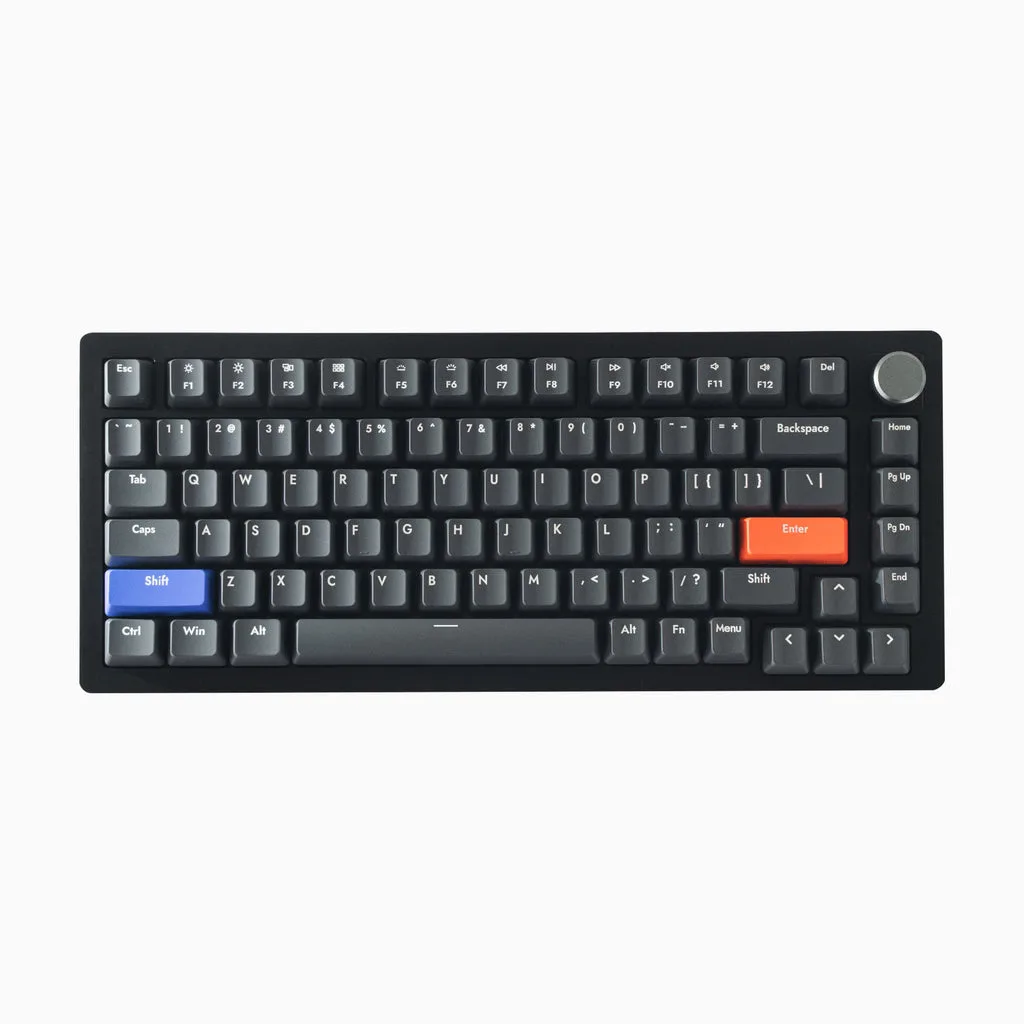
DrunkDeer A75
Bottom LineThe pick if you want rapid trigger and a 75% layout with arrow keys without paying for the most polished board on the market.
Bottom LineThe better board for competitive FPS players who want the strongest software, a longer warranty and a tiny footprint, and can live without arrow keys.
A note on versions: the original Wooting 60HE is still sold as the 60HE+ (Lekker L60s switches, steel plate, ABS case), and the newer 60HE v2 sits next to it with an aluminum or ABS case. We use the 60HE v2 for the card and the specs table and call out the 60HE+ where it differs. On the DrunkDeer side we compare the standard A75. The A75 Pro is an upgraded version with an aluminum case, covered below where it matters.
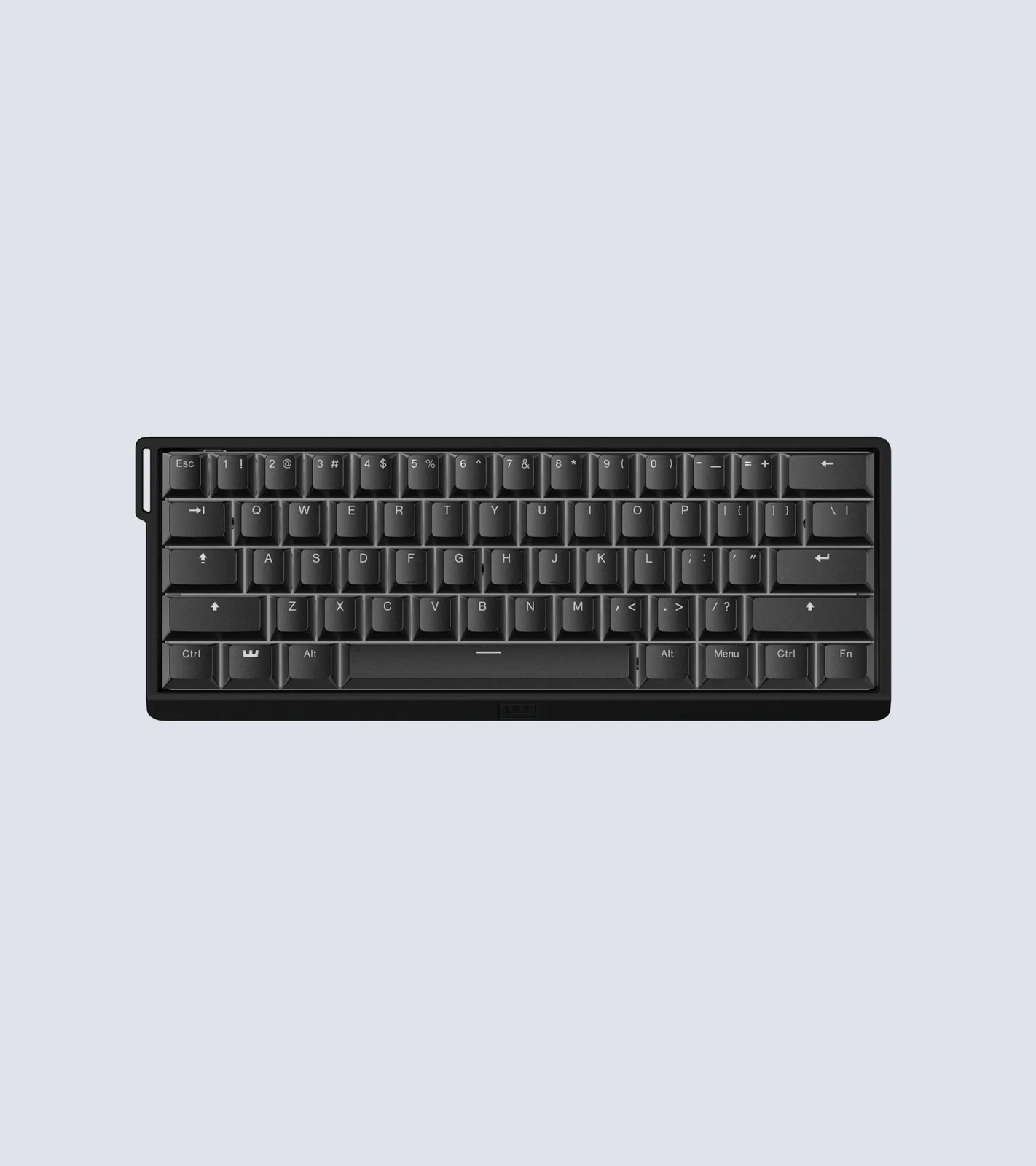
This is the biggest day-to-day difference. The A75 is a 75% board, so it keeps the arrow keys and a function row. The Wooting 60HE is a 60% board with no arrow cluster, so navigation keys live on a function layer. Wooting lists the 60HE v2 at 305 x 115 mm (12.0 x 4.5 in). For more boards in that size class, see our best 60 percent keyboard for Fortnite picks.
If you play FPS games at low sensitivity, the smaller Wooting leaves more desk space for mouse swipes. If the same keyboard also handles work, chat and spreadsheets, the A75’s extra keys will save you from layer gymnastics. Neither layout is better in the abstract. Pick the one that matches how you actually use the board.
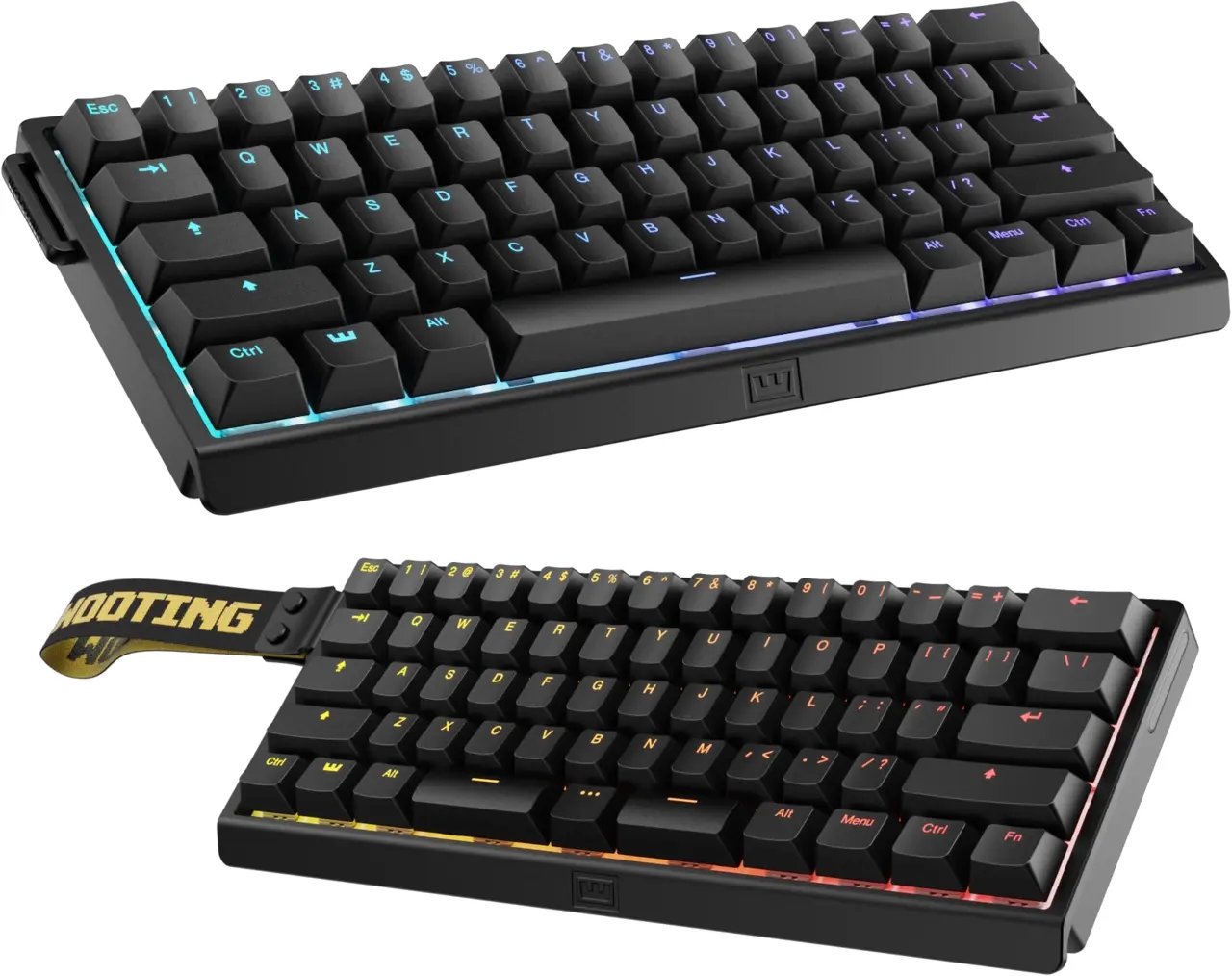
The compact 60% layout of the Wooting 60HE v2, shown with a standard and a split spacebar (Image: Wooting)
Build Quality: Wooting Feels More Premium
Wooting has the edge here. The 60HE+ pairs an ABS case with a steel switch plate and weighs 605 g (1.33 lb). The 60HE v2 can be ordered with an aluminum case at 945 g or an ABS case at 606 g, and it uses an FR4 plate plus Poron foam layers to deaden sound. Wooting also covers its keyboards with a four-year warranty that excludes the LEDs.
DrunkDeer sells the A75 in several colors, with ABS or PBT keycaps, ANSI and ISO layouts, and aluminum PVD case variants. The A75 Pro goes further with a full aluminum case. It weighs about 1,000 g and comes with a one-year warranty, which is a big gap next to Wooting’s four years. DrunkDeer’s board is the lower-priced option and the materials and warranty reflect that.
Switches: Both Are Linear Magnetic, Feel Differs
Both keyboards use magnetic Hall effect switches with adjustable actuation and rapid trigger. DrunkDeer specifies actuation from 0.2 mm with rapid trigger sensitivity adjustable in 0.1 mm steps. Wooting adjusts actuation in 0.1 mm precision, with presets at 0.1, 0.5, 1, 2, 3 and 4 mm on the 60HE v2. The 60HE v2 uses Lekker Tikken switches with 4 mm of travel and a closed bottom for a deeper, more muted sound.
Feel is subjective. The older Lekker60 switch starts at about 40gf and peaks near 60gf, which suits players who press hard. DrunkDeer’s Raesha magnetic switches, found in the A75 Pro, feel lighter and smoother, closer to a Gateron Jade. Neither gap is large enough to decide the purchase on its own.
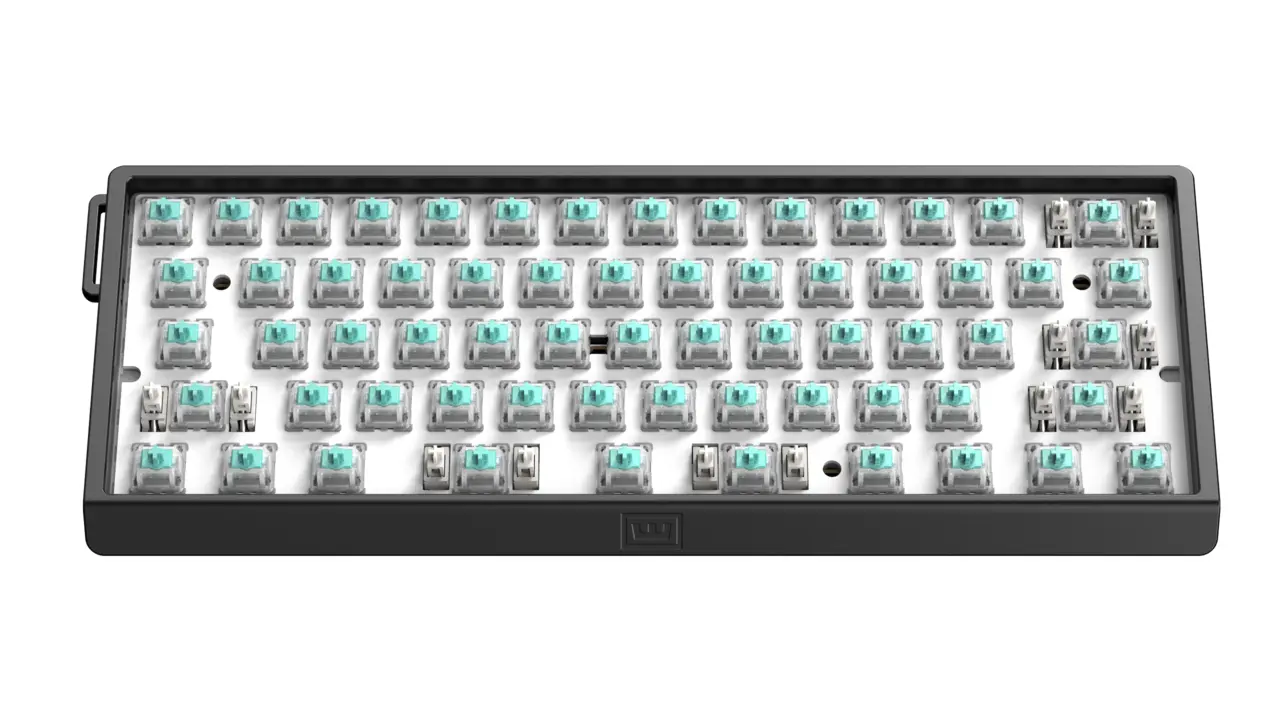
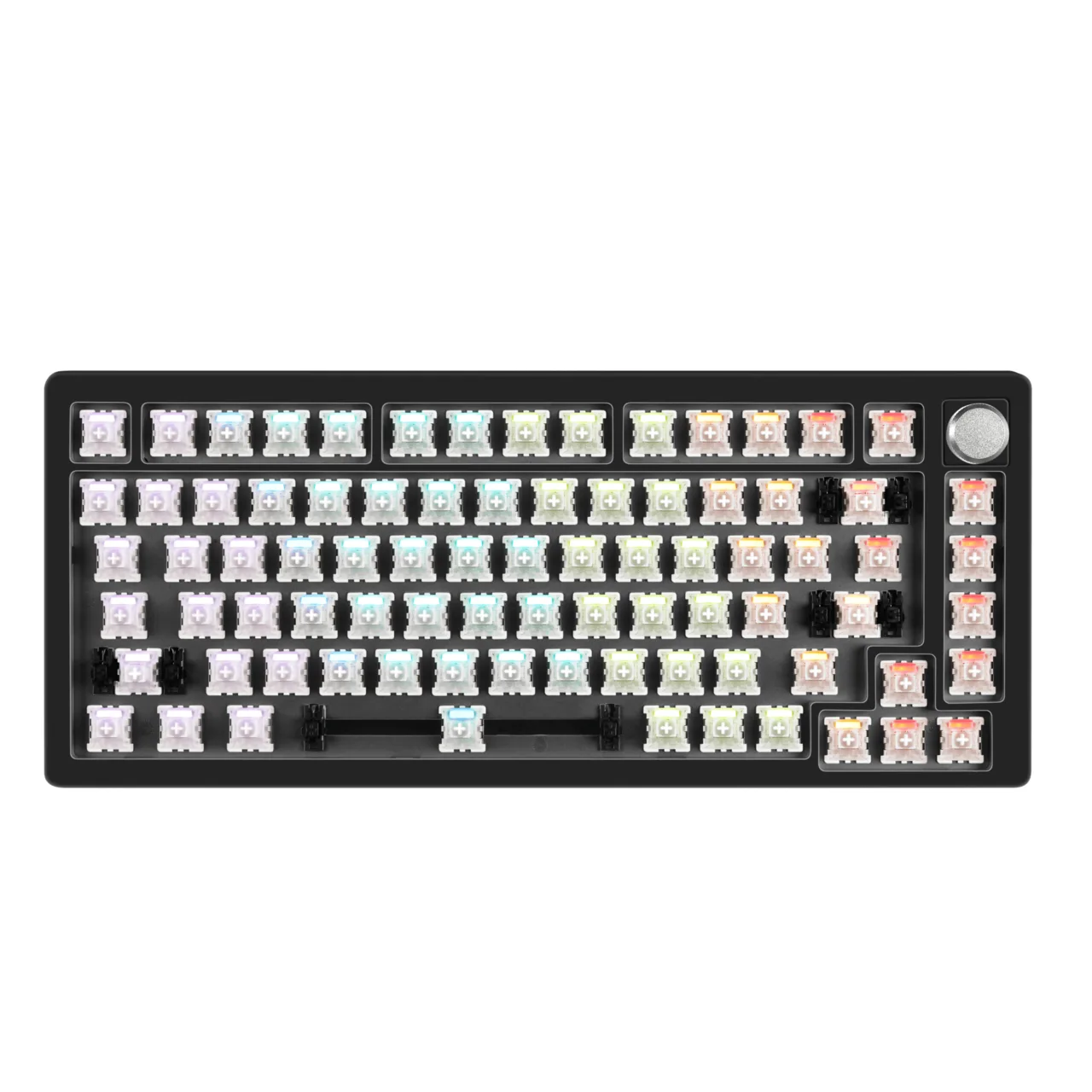
The Wooting 60HE v2 without keycaps, showing its Lekker magnetic switches (Image: Wooting)The DrunkDeer A75 without keycaps, showing its magnetic switch layout (Image: DrunkDeer)
Keycaps and Typing: Wooting’s PBT vs DrunkDeer’s Options
Wooting’s pre-built 60HE v2 ships with PBT keycaps that have a slight texture and shine-through legends, and PBT does not shine over time. The standard A75 ships with OEM-profile ABS keycaps, with PBT and shine-through options available when you order. For typing, the lighter DrunkDeer switch feel can be easier on people who dislike a heavy press, while the Wooting suits players who press harder.
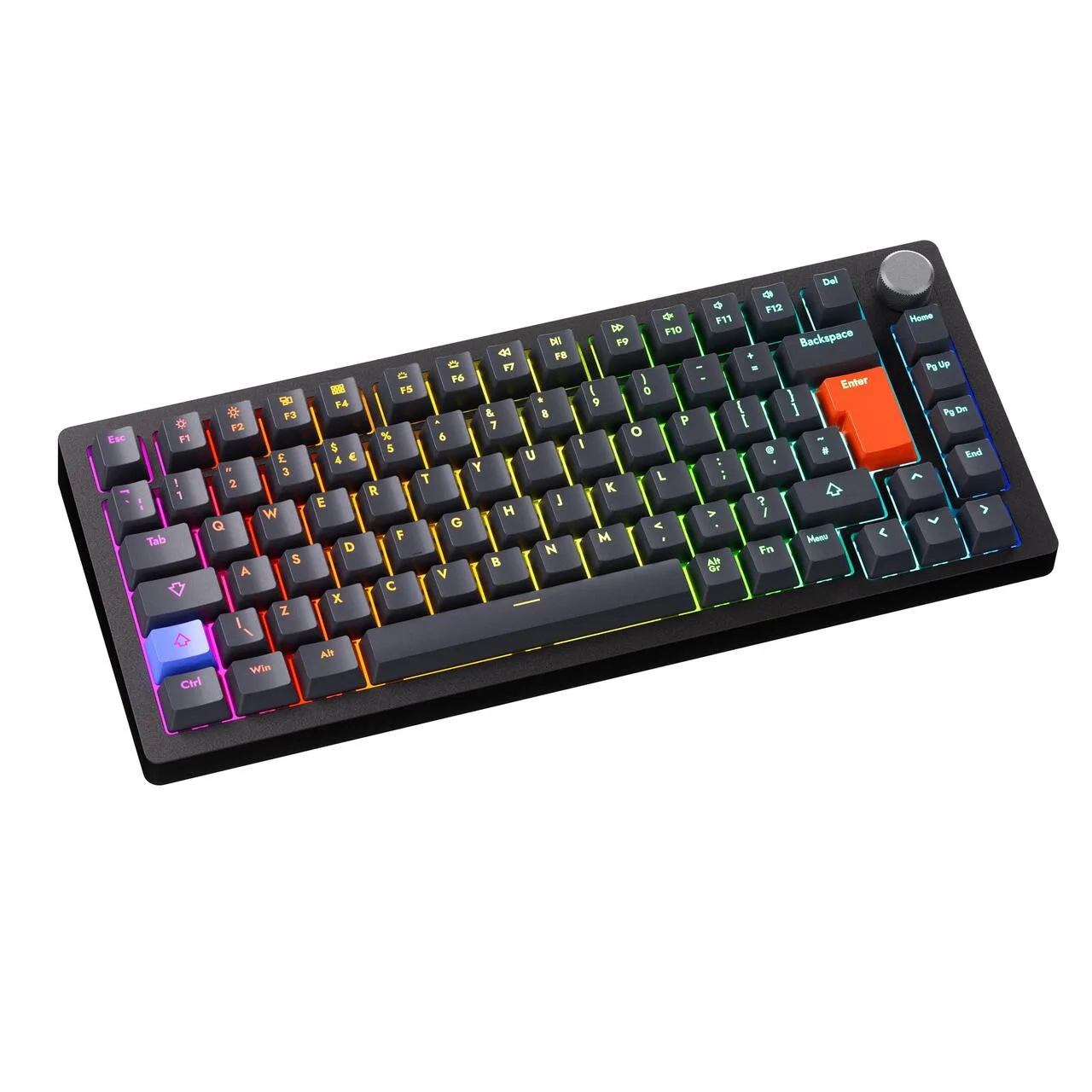
The DrunkDeer A75 with its RGB backlight on (Image: DrunkDeer)
Software: Wootility Is Deeper, Antler Is Easier
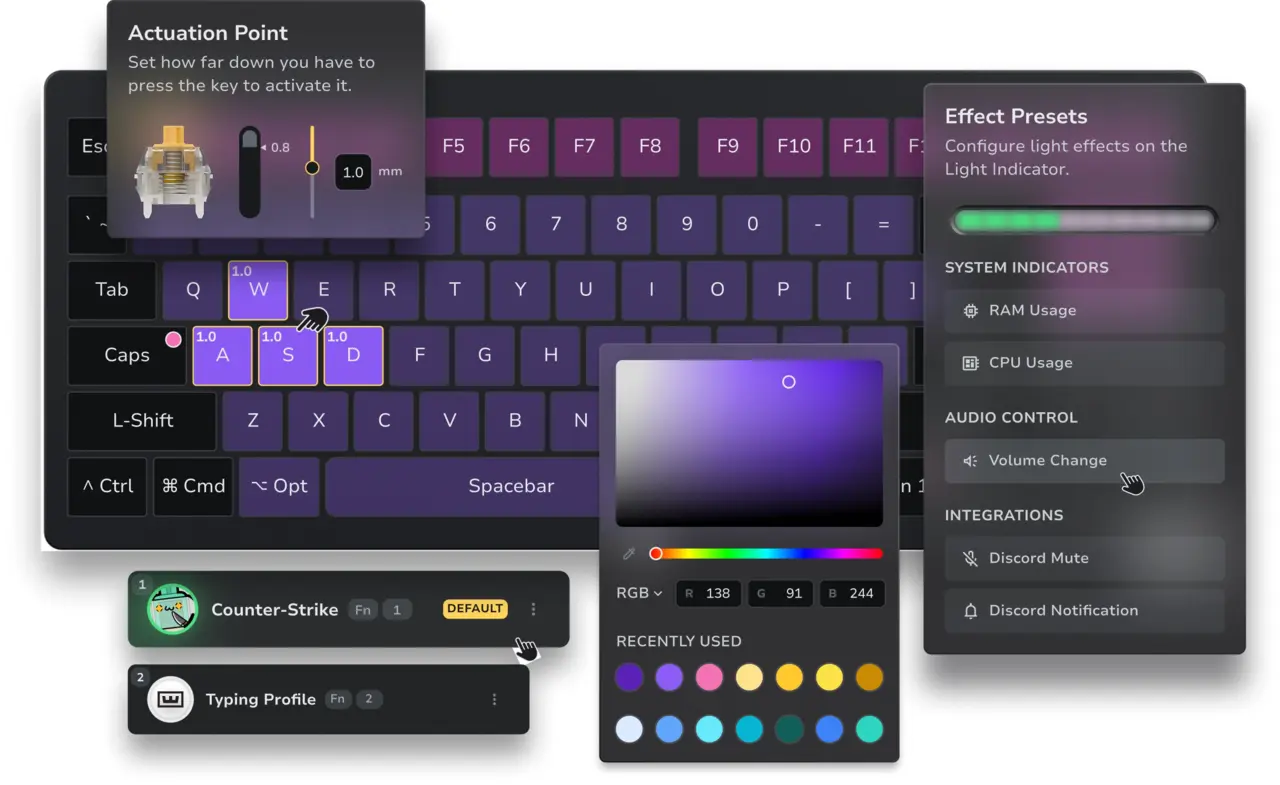
Wooting’s Wootility is the more complete package. It runs in the app or in the browser, stores up to four onboard profiles, and offers Rapid Trigger, Rappy Snappy, Snappy Tappy (SOCD), Dynamic Keystroke, Mod Tap, Toggle Key and analog controller input. Wooting also tends to roll out new features and share them with older boards.
DrunkDeer’s Antler software is simpler and easier to learn. It covers rapid trigger, adjustable actuation and dynamic keystrokes, which is what most players need. Its SOCD handling is a little less refined than Wooting’s, and some features such as Turbo Mode still feel unfinished. If you want to tinker, Wooting wins. If you want to set it up in five minutes and play, Antler is fine.
Wooting’s Wootility software, with actuation, RGB and effect settings (Image: Wooting)
Latency and Gaming Performance: Close in Real Play
Wooting is the latency benchmark. The 60HE v2 scans at 8 kHz in Tachyon mode, with a stable input speed of around 0.125 ms, and the original 60HE is rated at roughly 2 ms with Tachyon mode on. The A75 Pro lands around 4 ms in comparison, which is still quick. Newer DrunkDeer models such as the A75 Ultra add 8K polling.
For actual games, that gap is hard to feel. A difference of a millisecond or two is far below what a human can notice, and both boards handle strafing and counter-strafing in Counter-Strike or Valorant well. Rapid trigger itself matters far more than the last half millisecond.
Price: DrunkDeer Is the Value Pick
Price is the clearest separator. DrunkDeer is known for lower-priced magnetic keyboards, and the A75 line is positioned as the cheaper alternative to the Wooting 60HE. Wooting sells a premium product and charges accordingly. Check current pricing on each store, because both brands run sales.
DrunkDeer A75 vs Wooting 60HE: Full Specs
Feature
DrunkDeer A75
Wooting 60HE v2
Layout
75% with arrow keys
60% no arrows
Switch type
Magnetic Hall effect
Magnetic Hall effect (Lekker Tikken)
Actuation range
Adjustable from 0.2 mm, 0.1 mm steps
0.1 to 4 mm, 0.1 mm precision Wins
Rapid Trigger
Yes, sensitivity in 0.1 mm steps
Yes
Software
DrunkDeer Antler
Wootility
Polling rate
1000 Hz (A75 Pro)
True 8 kHz (Tachyon mode) Wins
Case
ABS or aluminum PVD variants (A75 Pro: aluminum)
ABS or aluminum Wins
Weight
About 1,000 g (A75 Pro)
606 g ABS, 945 g aluminum
Keycaps
OEM ABS or PBT options
PBT
Warranty
1 year (A75 Pro)
4 years excluding LED Wins
Cable
1.5 m USB-C (A75 Pro)
2 m USB-C nylon braided Wins
And the Winner Is…
WinnerDrunkDeer A75
The Wooting 60HE is the better-built board, with a deeper software suite, lower latency on paper and a four-year warranty. But the DrunkDeer A75 gets surprisingly close in the things you feel while playing: rapid trigger, adjustable actuation and fast response. It also adds arrow keys and costs noticeably less. For most players who want a Hall effect board without spending Wooting money, the A75 is the smarter buy. If you play competitive FPS at a high level, want a 60% footprint, or plan to keep the board for years, the Wooting 60HE v2 is worth the premium. Either way, the DrunkDeer A75 vs Wooting 60HE choice is mostly about layout and budget, not raw speed.
Final Thoughts on the DrunkDeer A75 vs Wooting 60HE
Start with your desk and your keys. If you want arrow keys and a function row on one board for both work and games, the DrunkDeer A75 delivers rapid trigger for less. If every centimeter of mouse space counts and you want software you can keep tuning for years, the Wooting 60HE is the board to save for.
I'm Sean, and I write the comparisons on GameCuki. I cover anything gamers weigh up before buying: consoles and handhelds, PC components and gaming laptops, monitors, controllers, headsets and accessories, plus subscriptions and services like Game Pass and PlayStation Plus. I put both options on the same checklist, using official specs, professional reviews and owner feedback, and I only mention what owners say when at least two of them report the same thing. Every comparison ends with one clear verdict and the type of player each option suits. I don't accept free products or payment from brands, and what I write comes from research, not my own use of the products. You can read my full process on our How We Review page.
Areas of Focus
Controller Match-UpsHeadset Match-UpsConsole vs. ConsoleSpecs & Latency