

Closed headsets trap heat and squeeze sound into your head. An open back gaming headset lets the sound breathe, which makes footsteps and gunfire easier to place and keeps your ears cooler on long nights. Very few gaming brands make one, so this list starts with the three open-back headsets that include a mic, then covers the audiophile headphones most players pair with a separate mic.
Best Open Back Gaming Headset in 2026
GameCuki is reader-supported. When you buy through links on our site, we may earn an affiliate commission at no extra cost to you. As an Amazon Associate I earn from qualifying purchases. Learn more.
Our Top Picks
Best Overall
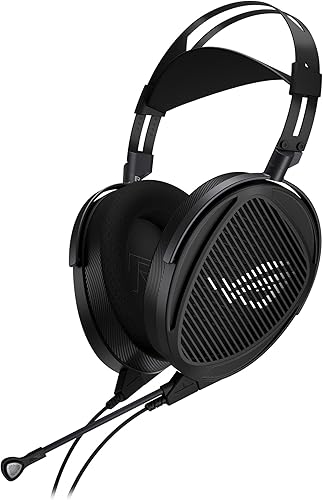
ASUS ROG Kithara
Bottom line: The best open-back gaming headset for most players, pairing HIFIMAN planar drivers with a detachable boom mic, though the mic picks up a lot of background noise.
- Planar magnetic sound from a gaming headset
- Boom mic included
- Plugs and USB-C adapter for almost any device
- Roomy headband that fits large heads
- Metal frame and hinges
- Wide, detailed soundstage
- Mic has little background noise rejection
- Mic may not work on Xbox
- Sounds best with an amp

Best Traditional Gaming Headset
Drop PC38X
Bottom line: The classic open-back gaming headset, light and clear with a flip-to-mute mic, though its plastic hinges feel fragile and the pads can be scratchy.
- Built-in mic with flip-to-mute
- Light, under 10 oz
- Clear directional audio for shooters
- Mic rejects nearby chatter well
- Velour pads stay cool for hours
- Works for gaming, music and movies
- Plastic hinges can crack
- Ear pad seam bothers some ears
- Quality control varies between units

Most Durable Headset
EPOS H6Pro Open
Bottom line: A sturdy, comfortable open gaming headset with a detachable magnetic mic, though its sound trails the PC38X and the boom mic can wear out.
- Much sturdier build than the PC38X
- Comfortable for long sessions
- Mic boom detaches magnetically
- Hear your own voice naturally without sidetone
- Two cables for PC and controllers
- Lightweight open ear cups
- Sound quality trails the PC38X
- Mic and boom can fail over time
- Can sound quiet on PC without adjusting settings

Best Value Headphones
Sennheiser HD 560S
Bottom line: The best value open-back headphones for gaming, with a wide, balanced sound and light, comfortable fit, as long as you add a mic and don't want big bass.
- Excellent value for open-back sound
- Wide soundstage for positional audio
- Light and comfortable for long sessions
- Balanced sound for games and music
- Angled drivers aim sound at your ears
- Natural tuning keeps effects distinct
- No mic, so you'll need a ModMic or desk mic
- Lacks low-end thump
- Clamps tightly for the first few days

Best Upgrade
Sennheiser HD 490 PRO
Bottom line: The best step up from the HD 560S, with more bass, better comfort and two sets of ear pads, though it costs about twice as much and has no mic.
- Wide soundstage with precise localization
- Much fuller bass than the HD 560S
- Easy to drive without an amp
- Pads have grooves for glasses
- Two sets of washable, replaceable pads
- Detachable cable plugs into either ear cup
- No mic
- Expensive
- Less speaker-like than flagship open-backs

Best Planar Headphones
HIFIMAN Edition XS
Bottom line: The best-value planar magnetic open-backs, with a huge soundstage and controlled bass, as long as you have a decent amp and add a mic.
- Wide soundstage and strong imaging for positional cues
- Controlled, full bass for an open-back
- Replaceable cable
- Strong value at its current price
- Planar magnetic drivers for detailed sound
- Lightweight headband with memory foam
- No mic
- Benefits from a good amp
- Tuning isn't for everyone

Easiest to Drive
beyerdynamic DT 900 PRO X
Bottom line: A studio open-back that plays loud from almost anything thanks to its 48-ohm drivers, a good fit for consoles and laptops, though it has no mic.
- No amp needed, even on a laptop or controller
- Wide, natural imaging
- Detachable mini-XLR cable
- Studio-grade build
- 48-ohm drivers play loud from any source
- German-made build for daily use
- No mic
- Expensive

Best Premium Pick
Sennheiser HD 800 S
Bottom line: The ultimate open-back for immersive single-player games, with the most spacious sound here, but it's very expensive and may need an amp.
- The most spacious-sounding pick here
- Exceptional positional accuracy
- Very comfortable for long sessions
- Excellent build quality
- Makes big single-player worlds feel enormous
- Balanced sound
- Very expensive
- May need a headphone amp
- No mic, and lacks thumpy low bass
Table of Contents
Best Open-Back Gaming Headsets: Our Picks in Detail
1
Best Overall
ASUS ROG Kithara
Bottom line: The best open-back gaming headset for most players, pairing HIFIMAN planar drivers with a detachable boom mic, though the mic picks up a lot of background noise.
The ROG Kithara is the rare headset that gives you audiophile-grade drivers and a mic in one box. ASUS built it with HIFIMAN, using 100 mm planar magnetic drivers that deliver a wide, detailed soundstage.
Pros & Cons
Pros
- Planar magnetic sound from a gaming headset
- Boom mic included
- Plugs and USB-C adapter for almost any device
- Roomy headband that fits large heads
- Metal frame and hinges
- Wide, detailed soundstage
Cons
- Mic has little background noise rejection
- Mic may not work on Xbox
- Sounds best with an amp
Why We Picked It
It outclasses typical gaming headsets for sound, including some pricier wireless flagships, while staying lighter than many of them. It ships with 4.4 mm balanced, 3.5 mm and 6.3 mm plugs plus a USB-C adapter, so it works with PCs, consoles, phones and DACs. The headband is roomy enough for very large heads, a group most gaming headsets squeeze.
Who It's For
You want open-back sound and a mic in one box, with no separate gear to buy. The Kithara pairs HIFIMAN planar drivers with a detachable boom mic, and the 4.4 mm, 3.5 mm and 6.3 mm plugs plus the USB-C adapter let it follow you from a PC to a console, phone or DAC. A roomy headband suits players with larger heads.
Specs & Configurations
- Drivers
- 100 mm HIFIMAN planar magnetic, ROG-tuned
- Mic
- detachable on-cable MEMS boom mic, 20 Hz to 20 kHz
- Connection
- wired, 4.4 mm balanced, 3.5 mm and 6.3 mm plugs, USB-C adapter
- Build
- metal frame and hinges, 8-level adjustable headband
- Works with
- PC, consoles, mobile, DACs and amps
Get It Now
Check Price on Amazon
2
Best Traditional Gaming Headset
Drop PC38X
Bottom line: The classic open-back gaming headset, light and clear with a flip-to-mute mic, though its plastic hinges feel fragile and the pads can be scratchy.
The PC38X, originally sold as the Drop + EPOS PC38X, is one of the best-known open-back gaming headsets, an all-in-one for gaming, music and movies.
Pros & Cons
Pros
- Built-in mic with flip-to-mute
- Light, under 10 oz
- Clear directional audio for shooters
- Mic rejects nearby chatter well
- Velour pads stay cool for hours
- Works for gaming, music and movies
Cons
- Plastic hinges can crack
- Ear pad seam bothers some ears
- Quality control varies between units
Why We Picked It
It's a true headset, with a condenser boom mic that mutes when you flip it up, a light frame under 10 ounces and velour pads that stay cool during four- and five-hour sessions. Directional audio is a strength, and the mic does a surprisingly good job of keeping office or household chatter out of your calls. It also beats the EPOS H6Pro Open on sound.
Who It's For
You want a plug-in open-back headset that just works: flip the mic up to mute and keep playing. At under 10 ounces with velour pads, it stays comfortable through four- and five-hour sessions, and the directional audio helps in shooters. The mic also keeps office or household chatter out of your calls.
Specs & Configurations
- Type
- open-back gaming headset
- Mic
- electret condenser, bi-directional, auto-mutes when flipped up
- Connection
- wired
- Weight
- under 10 oz (Drop)
- Pads
- velour
Get It Now
Check Price on Amazon
3
Most Durable Headset
EPOS H6Pro Open
Bottom line: A sturdy, comfortable open gaming headset with a detachable magnetic mic, though its sound trails the PC38X and the boom mic can wear out.
EPOS' H6Pro Open trades a little of the PC38X's sound quality for much better build quality and comfort, which makes it the safer pick if your gear takes a beating.
Pros & Cons
Pros
- Much sturdier build than the PC38X
- Comfortable for long sessions
- Mic boom detaches magnetically
- Hear your own voice naturally without sidetone
- Two cables for PC and controllers
- Lightweight open ear cups
Cons
- Sound quality trails the PC38X
- Mic and boom can fail over time
- Can sound quiet on PC without adjusting settings
Why We Picked It
Its open ear cups let you hear your own voice naturally, so you don't need mic monitoring, and the boom mic detaches magnetically if you switch to a desk mic. It comes with two cables, one with a split mic and headphone connection for PC and one single plug for controllers. The open version also sounds noticeably better than EPOS' closed H6Pro.
Who It's For
Your gear takes a beating and you want an open headset that holds up. Open ear cups let you hear your own voice naturally with no mic monitoring, the boom detaches magnetically if you switch to a desk mic, and two cables cover both PC, with a split connection, and controllers, with a single plug.
Specs & Configurations
- Type
- open acoustic gaming headset
- Mic
- detachable magnetic boom
- Connection
- wired, 2 cables included
- Design
- open ear cups, lightweight
Get It Now
Check Price on Amazon
4
Best Value Headphones
Sennheiser HD 560S
Bottom line: The best value open-back headphones for gaming, with a wide, balanced sound and light, comfortable fit, as long as you add a mic and don't want big bass.
If you're willing to add a separate mic, the Sennheiser HD 560S is the open-back most often recommended to gamers on a budget, and it's hard to beat for the money.
Pros & Cons
Pros
- Excellent value for open-back sound
- Wide soundstage for positional audio
- Light and comfortable for long sessions
- Balanced sound for games and music
- Angled drivers aim sound at your ears
- Natural tuning keeps effects distinct
Cons
- No mic, so you'll need a ModMic or desk mic
- Lacks low-end thump
- Clamps tightly for the first few days
Why We Picked It
Sennheiser angles the drivers toward your ears for a wide soundstage, which helps you hear where sounds come from. The sound is balanced and natural, so every instrument and effect stays distinct, and the lightweight plastic build stays comfortable for hours. It's a great first pair of open-backs for gaming and music.
Who It's For
This is your first pair of open-backs and you already own a mic or plan to add one. Angled drivers give a wide soundstage that helps you hear where sounds come from, and the balanced sound and lightweight build stay comfortable for hours of gaming and music.
Specs & Configurations
- Type
- open-back headphones, no mic
- Drivers
- dynamic, angled toward the ears (E.A.R.)
- Connection
- wired, 1/4-inch plug
- Fit
- lightweight, plastic build
Get It Now
Check Price on Amazon
5
Best Upgrade
Sennheiser HD 490 PRO
Bottom line: The best step up from the HD 560S, with more bass, better comfort and two sets of ear pads, though it costs about twice as much and has no mic.
The HD 490 PRO is essentially an upgraded HD 560S, and it's one of the best open-backs you can game on.
Pros & Cons
Pros
- Wide soundstage with precise localization
- Much fuller bass than the HD 560S
- Easy to drive without an amp
- Pads have grooves for glasses
- Two sets of washable, replaceable pads
- Detachable cable plugs into either ear cup
Cons
- No mic
- Expensive
- Less speaker-like than flagship open-backs
Why We Picked It
It keeps the HD 560S' imaging and wide soundstage but adds much fuller bass, a sturdier build and a more comfortable fit. It's easy to drive, so a PC, laptop or controller can power it without an amp. Two sets of ear pads let you tweak the sound, and grooves in the pads keep your glasses from breaking the seal.
Who It's For
You want one premium open-back that covers gaming, music and content work. It's easy to drive, so a PC, laptop or controller can power it without an amp, and the two sets of pads let you tweak the sound. Grooves in the pads keep your glasses from breaking the seal.
Specs & Configurations
- Type
- open-back headphones, no mic
- Frequency response
- 5 to 36,000 Hz (Sennheiser)
- Pads
- 2 sets, washable and replaceable
- Cable
- detachable, plugs into either ear cup
- Extras
- grooves in the pads for glasses arms
Get It Now
Check Price on Amazon
6
Best Planar Headphones
HIFIMAN Edition XS
Bottom line: The best-value planar magnetic open-backs, with a huge soundstage and controlled bass, as long as you have a decent amp and add a mic.
Open-back headphones usually lack low end. Planar magnetic models are the exception, and the Edition XS is the most affordable way to get one that's great for games.
Pros & Cons
Pros
- Wide soundstage and strong imaging for positional cues
- Controlled, full bass for an open-back
- Replaceable cable
- Strong value at its current price
- Planar magnetic drivers for detailed sound
- Lightweight headband with memory foam
Cons
- No mic
- Benefits from a good amp
- Tuning isn't for everyone
Why We Picked It
Its planar magnetic drivers deliver a wide soundstage with bass that hits without bleeding into the rest of the mix. Imaging is precise enough to place footsteps and positional cues, and it's a clear step up in detail from the HD 560S. Run it from a decent amp or DAC to get the most from it.
Who It's For
You want planar magnetic sound without paying what most planar headphones cost. The Edition XS delivers a wide soundstage and bass that hits without bleeding into the mix, with imaging precise enough to place footsteps. Pair it with a decent amp or DAC at your desk, and the lightweight memory foam headband keeps long sessions comfortable.
Specs & Configurations
- Type
- open-back planar magnetic headphones, no mic
- Drivers
- Stealth Magnet with NEO supernano diaphragm
- Cable
- replaceable, 3.5 mm
- Headband
- lightweight with memory foam
Get It Now
Check Price on Amazon
7
Easiest to Drive
beyerdynamic DT 900 PRO X
Bottom line: A studio open-back that plays loud from almost anything thanks to its 48-ohm drivers, a good fit for consoles and laptops, though it has no mic.
Many audiophile headphones need an amp to reach full volume. The DT 900 PRO X doesn't, which makes it one of the easiest open-backs to game on from a console controller or laptop.
Pros & Cons
Pros
- No amp needed, even on a laptop or controller
- Wide, natural imaging
- Detachable mini-XLR cable
- Studio-grade build
- 48-ohm drivers play loud from any source
- German-made build for daily use
Cons
- No mic
- Expensive
Why We Picked It
beyerdynamic designed it with 48-ohm drivers so it plays loud from almost any source, and its open-back design gives you a wide, natural soundstage. The detachable mini-XLR cable is easy to replace, and the German-made build is meant for daily studio use.
Who It's For
You game from a console controller or laptop and don't want to buy an amp. The 48-ohm drivers play loud from almost any source, and the open-back design gives a wide, natural soundstage. The detachable mini-XLR cable is easy to replace, and the German-made build is meant for daily studio use.
Specs & Configurations
- Type
- open-back studio headphones, no mic
- Drivers
- STELLAR.45
- Impedance
- 48 ohms, no amp needed (beyerdynamic)
- Cable
- detachable mini-XLR, 1/4-inch adapter included
- Made in
- Germany
Get It Now
Check Price on Amazon
8
Best Premium Pick
Sennheiser HD 800 S
Bottom line: The ultimate open-back for immersive single-player games, with the most spacious sound here, but it's very expensive and may need an amp.
The HD 800 S is the benchmark for open-back sound, and its positional accuracy is unmatched among the headphones here.
Pros & Cons
Pros
- The most spacious-sounding pick here
- Exceptional positional accuracy
- Very comfortable for long sessions
- Excellent build quality
- Makes big single-player worlds feel enormous
- Balanced sound
Cons
- Very expensive
- May need a headphone amp
- No mic, and lacks thumpy low bass
Why We Picked It
Its soundstage is the widest on this list, closer to a pair of speakers in a room than to typical headphones, which makes big single-player worlds feel enormous. It's also very comfortable, with excellent build quality, so you can play for hours without much fatigue.
Who It's For
You play big single-player worlds and want them to feel enormous. The HD 800 S has the widest soundstage on this list, closer to speakers in a room than typical headphones, and the excellent build and comfort let you play for hours without much fatigue. An amp already on your desk lets it show what it can do.
Specs & Configurations
- Type
- open-back reference headphones, no mic
- Drivers
- ring radiator
- Sound
- balanced, very wide soundstage
- Fit
- very comfortable, excellent build quality
Get It Now
Check Price on AmazonHow to Add a Mic to Open-Back Headphones
Most of the best open-backs don’t have a mic, so you’ll need a separate one, from a USB desk mic to an attachable mic. The most popular attachable option is Antlion’s ModMic Wireless, which clips magnetically to any headphones, switches between a noise-canceling mode and a higher-quality mode, and connects with a USB-A dongle to PC, Mac and PS5 (not Xbox). It sounds far better than a typical gaming headset mic, though its battery and software are less polished than the audio. If you’d rather keep everything in one closed headset, see our picks for the best gaming headset with detachable mic.
Check Price on AmazonOpen-Back vs Closed-Back for Gaming
Open-back headphones leave the back of the ear cups open, so sound flows out naturally. That creates a wider, more speaker-like soundstage that helps you place footsteps and gunfire, and the open design keeps your ears cooler. The trade-off is isolation. Open-backs leak sound to people nearby and let room noise in, which can be distracting during games if your room isn’t quiet, and their neutral tuning isn’t for everyone. If you share a room or play in a noisy space, a closed-back headset is still the better choice.
Things to Consider Before You Buy
Mic or no mic. All-in-one headsets like the ROG Kithara, PC38X and H6Pro Open include a boom mic. Audiophile headphones like the HD 560S and HD 490 PRO usually sound better but need a separate mic.
Amp requirements. Some open-backs need more power than a laptop or controller can provide. The DT 900 PRO X and HD 490 PRO are easy to drive, while planar models like the Edition XS and premium picks like the HD 800 S benefit from an amp.
Platform. Check how you’ll connect. The ROG Kithara includes a USB-C adapter, and 3.5 mm headsets plug into most controllers, but the Kithara’s mic may not work on Xbox.
Comfort. Open-backs are usually cooler than closed headsets, but clamp force and pad material vary. The HD 560S loosens after a few days, and the HD 490 PRO’s pads have grooves for glasses.
Which One Should You Get?
Want one box and done? The ROG Kithara gets you open-back sound and a mic with no extra shopping. If you’d rather build a setup that lasts, start with the HD 560S and a ModMic, then move up to the HD 490 PRO when you want more bass and comfort. Only reach for the HD 800 S if you already own an amp and play mostly single-player.