GameCuki is reader-supported. When you buy through links on our site, we may earn an affiliate commission at no extra cost to you. As an Amazon Associate I earn from qualifying purchases. Learn more.
Both have won Game of the Year, both come from director Hidetaka Miyazaki, and you probably only have room for one big FromSoftware game right now. The Sekiro vs Elden Ring decision hinges on how you like to fight: one katana and a perfectly timed deflect, or an open world packed with weapons, spells and ways around a hard boss. The sections below cover combat, difficulty, world design, builds and story, in that order.
Best for Pure Combat
Sekiro: Shadows Die Twice
Bottom LineThe pick if you want the sharpest sword fighting FromSoftware has made and are ready to master one strict system with no shortcuts.
Bottom LineThe better choice for most players, a huge open world that lets you build any character and pick your fights, and the easier door into the genre.
Combat: Sekiro Is a Sword Duel, Elden Ring Is a Toolbox
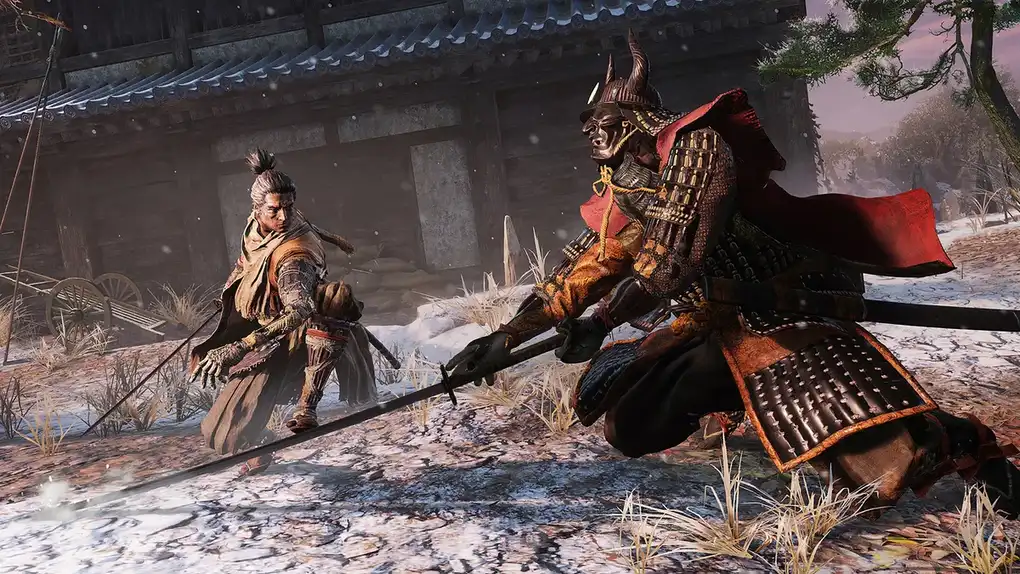
Sekiro puts you in the role of Wolf, a shinobi with one katana and a prosthetic arm. Fights revolve around posture rather than health. Every attack you deflect at the right moment builds up the enemy’s posture bar, and once it breaks, you land a single killing blow called a Deathblow. Dodging and hanging back rarely work, so the game pushes you forward into a rhythm of attacks and deflects that feels closer to a rhythm game than a typical Souls fight.
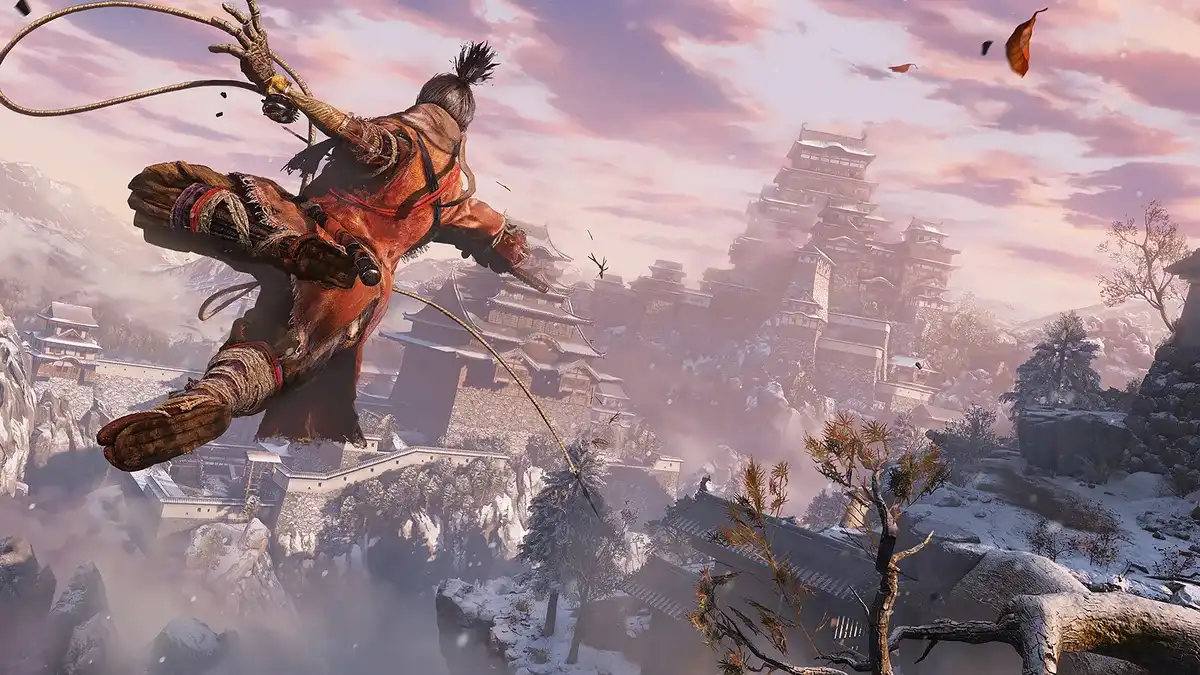
The prosthetic arm adds tools such as a shuriken, a firecracker and an axe, each useful against specific enemies, and Combat Arts give you special sword moves. A grappling hook and a dedicated jump button let you reach rooftops and tree branches, and stealth matters too: an enemy that hasn’t spotted you can be killed or badly wounded in one strike.
Sekiro’s fights are built around deflecting attacks to break the enemy’s posture. (Image: FromSoftware)
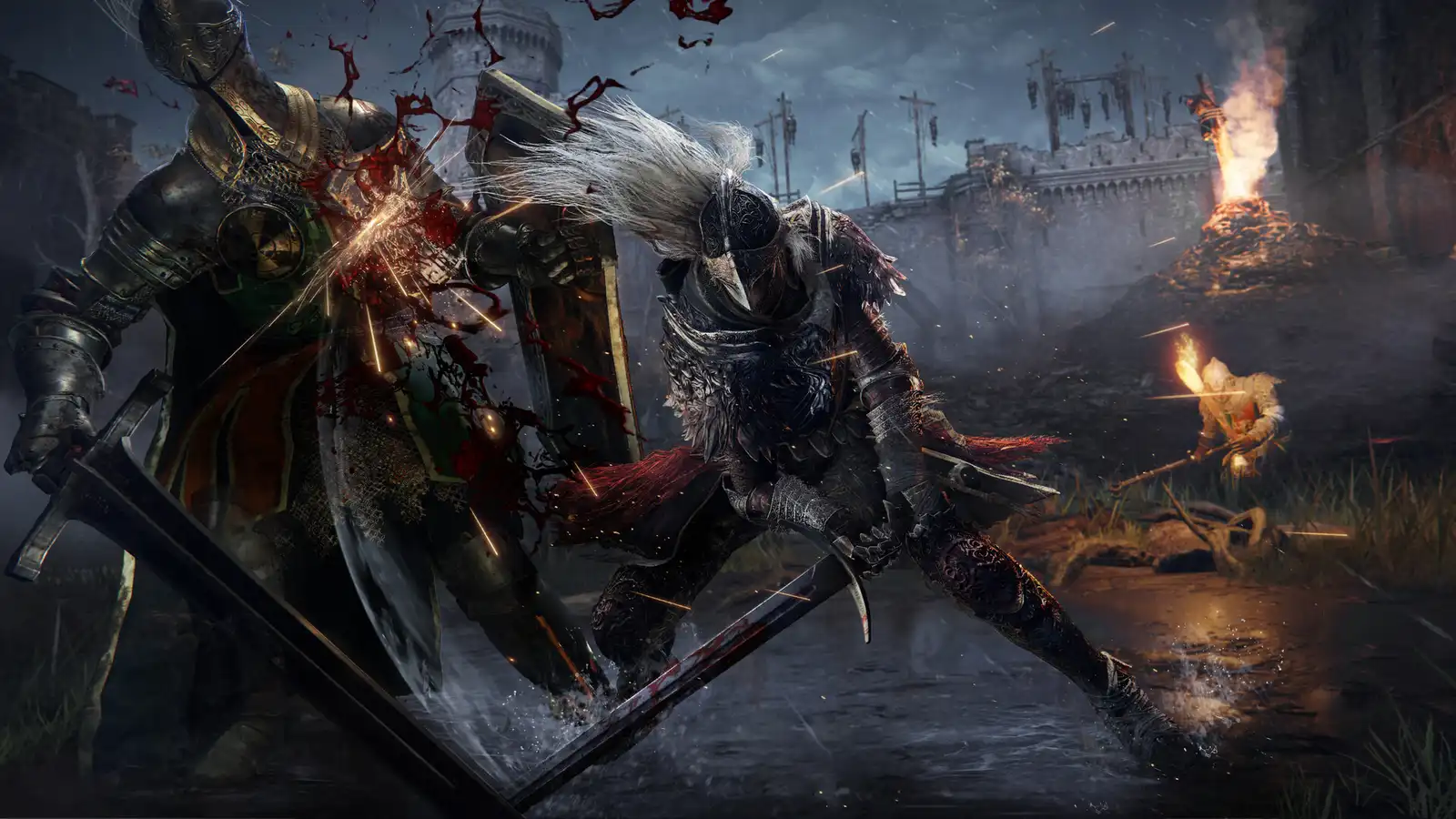
Elden Ring hands you far more options. You can fight up close with swords, axes and spears, block with a shield, parry, attack from range with bows, or build a character around sorceries and incantations. Ashes of War add special skills to weapons, and in the open world you can fight from the back of your spectral steed, Torrent. If one approach fails, you can switch weapons, change your build or bring help.
If parrying is what draws you to Sekiro, our Lies of P vs Sekiro comparison looks at another soulslike built around deflecting.
Difficulty: Sekiro Is Harder to Get Through
Most players find Sekiro the harder game to finish, and the reason is that it never lets you around a wall. There are no stats to grind, no character builds to swap and no online co-op. Each boss has to be learned until you can deflect its attacks on reaction. Sekiro has no difficulty settings, and its only optional settings make the game even harder: ringing the Demon Bell raises the challenge, and giving up Kuro’s Charm on a fresh playthrough makes blocked attacks still hurt you.
Elden Ring has no difficulty settings either, but it gives you many ways to make a fight easier. You can leave a tough area, explore elsewhere and come back at a higher level. You can summon AI helpers with Spirit Ashes or call in other players through online co-op. You can also switch to a stronger weapon or a ranged build. That flexibility is why Elden Ring is usually the safer first FromSoftware game, even though its hardest bosses are as punishing as anything in Sekiro.
Sekiro softens one part of dying. If you have resurrection power, you can revive on the spot instead of returning to a checkpoint, and defeating enemies refills that power.
World Design: Elden Ring’s Open World vs Sekiro’s Ashina
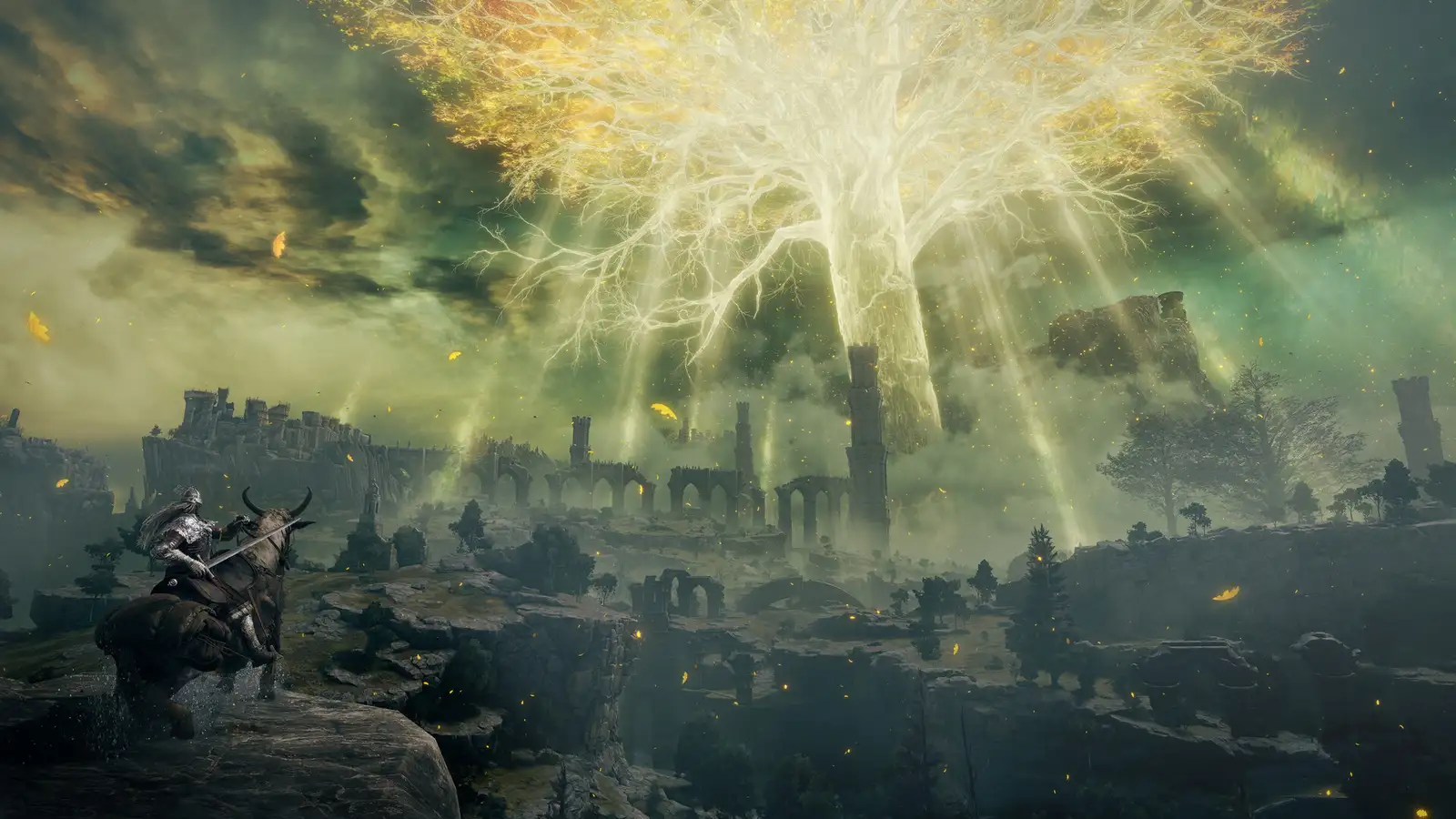
Elden Ring is a full open world. The Lands Between spread across several large regions that you cross on Torrent, with caves, catacombs and optional bosses hidden everywhere. Nothing tells you where to go, so you can stumble into an area far above your level or find a powerful weapon early.
Elden Ring’s Lands Between is a full open world explored on horseback. (Image: FromSoftware)
Sekiro is set in Ashina, a fictional take on late Sengoku period Japan. Its areas connect to each other and branch in places, but progress is far more directed. There is no map, and the grappling hook turns exploration into a vertical puzzle of rooftops, cliffs and hidden paths. It’s a smaller, tightly handcrafted world, which suits a game built around set-piece duels.
The grappling hook makes Ashina a vertical world of rooftops and cliffs. (Image: FromSoftware)
Builds and Progression: Elden Ring Lets You Reinvent Your Character
Elden Ring is a full RPG. You create your own character, pick a starting class and spend runes to raise attributes like Strength, Dexterity, Intelligence and Faith. Hundreds of weapons, armor sets, spells and Ashes of War let you build a heavy knight, a fast samurai, a sorcerer or something in between. If a build stops working, a Larval Tear lets you redistribute your stats.
Sekiro has no character creation and no stat leveling in the usual sense. You always play Wolf, and your attack power rises by defeating major bosses. Progress comes from skill trees, Combat Arts, prosthetic tool upgrades, and items that add healing gourd charges or vitality. You get better at Sekiro mostly by getting better at deflecting, not by building a stronger character.
Elden Ring’s builds range from heavy melee to pure magic. (Image: FromSoftware)
Story and Lore: Sekiro Tells, Elden Ring Hints
Sekiro tells a direct, character-driven story. Wolf has sworn to protect Kuro, a young lord with an immortal bloodline, and the plot follows his choice between that oath and the code he was raised with. Cutscenes and dialogue carry most of it, and four endings depend on key decisions.
Elden Ring is classic FromSoftware storytelling. You play a Tarnished, an exile called back to the Lands Between to restore the shattered Elden Ring and become Elden Lord. George R. R. Martin wrote the world’s backstory and Miyazaki wrote the main storyline, but much of it is buried in item descriptions and side characters for you to piece together. There are six endings. Pick Sekiro for a story you can follow, and Elden Ring for a mythology to dig into.
Already finished one of them? Our Lies of P vs Elden Ring comparison covers a strong next soulslike from outside FromSoftware.
Sekiro vs Elden Ring: Full Specs
Feature
Sekiro
Elden Ring
Developer
FromSoftware
FromSoftware
Director
Hidetaka Miyazaki
Hidetaka Miyazaki
Release date
March 22, 2019
February 25, 2022
Platforms
PC, PS4, Xbox One (plays on PS5 and Xbox Series X/S)
PC, PS5, PS4, Xbox Series X/S, Xbox One, Switch 2
Setting
Ashina, late Sengoku period Japan
The Lands Between (high fantasy)
World
Connected areas, no map
Open world Wins
Character
Wolf (fixed)
Custom character, choice of class Wins
Leveling
Attack power from bosses, skill trees
Runes into eight attributes Wins
Combat focus
Deflects and posture
Melee, magic, ranged, mounted Wins
Stealth and grappling hook
Yes Wins
Stealth only
Multiplayer
None
Co-op and PvP Wins
Boss help
None
Spirit Ashes and online co-op Wins
Difficulty settings
None (optional harder modes)
None
Endings
Four
Six Wins
Expansion
None
Shadow of the Erdtree (June 2024) Wins
Steam reviews (Oct. 12, 2026)
Overwhelmingly Positive, 95% of 357,487 Wins
Very Positive, 93% of 1,158,511
Copies sold
10 million+ (Sept. 2023)
30 million+ (April 2025) Wins
Biggest award
The Game Awards 2019 Game of the Year
The Game Awards 2022 Game of the Year
PC minimum GPU
GTX 760 / Radeon HD 7950 Wins
GTX 1060 3 GB / RX 580 4 GB
PC minimum RAM
4 GB Wins
12 GB
Storage
25 GB Wins
60 GB
FAQ
Is Sekiro harder than Elden Ring?
For most players, yes. Sekiro forces you to master deflecting with no summons, no co-op and no stat grinding, while Elden Ring lets you level up, change builds or bring help when a boss is too hard.
Is Sekiro more linear than Elden Ring?
Yes. Sekiro’s areas connect and branch, but the path is far more directed than Elden Ring’s open world.
Should my first soulslike be Sekiro or Elden Ring?
Elden Ring is the easier start because you can choose how to handle every challenge. Sekiro is a great second game once you enjoy learning bosses.
Can you play Sekiro with friends?
No. Sekiro is single-player only, while Elden Ring supports online co-op and PvP.
And the Winner Is…
WinnerElden Ring
Sekiro does one thing better than any other FromSoftware game: its sword fighting. When deflects start landing on rhythm and a boss’s posture finally breaks, nothing in Elden Ring feels quite as precise, and Ashina’s rooftops and grappling hook give it a speed the Lands Between never matches. It also runs on much older PC hardware. Still, Elden Ring is the one we’d hand to most people. It’s bigger, it lets you build any character you like, and when a boss stops you cold, you can ride off, level up, summon help and return stronger. That freedom makes it the better first FromSoftware game and the one with more to come back to. If you’ve already beaten Elden Ring, settle the Sekiro vs Elden Ring question by playing Sekiro next.
I'm Sean, and I write the comparisons on GameCuki. I cover anything gamers weigh up before buying: consoles and handhelds, PC components and gaming laptops, monitors, controllers, headsets and accessories, plus subscriptions and services like Game Pass and PlayStation Plus. I put both options on the same checklist, using official specs, professional reviews and owner feedback, and I only mention what owners say when at least two of them report the same thing. Every comparison ends with one clear verdict and the type of player each option suits. I don't accept free products or payment from brands, and what I write comes from research, not my own use of the products. You can read my full process on our How We Review page.
Areas of Focus
Controller Match-UpsHeadset Match-UpsConsole vs. ConsoleSpecs & Latency